A faceless channel can earn through every monetization method available on YouTube except the ones that require you personally, live face-to-face fan interaction, and none of the real, substantial income sources require that anyway. Ad revenue, affiliate commissions, your own products, brand deals, channel memberships, Super Thanks, YouTube Shopping, even licensing your own footage, all of it works without ever showing your face. The channels earning real money from this model almost never rely on just one of these. They stack three or four together, deliberately, in a specific order.
Here's every legitimate way to get paid from a faceless channel, which ones actually suit a faceless model well, and the order I'd build them in.
Ad Revenue Through The YouTube Partner Program
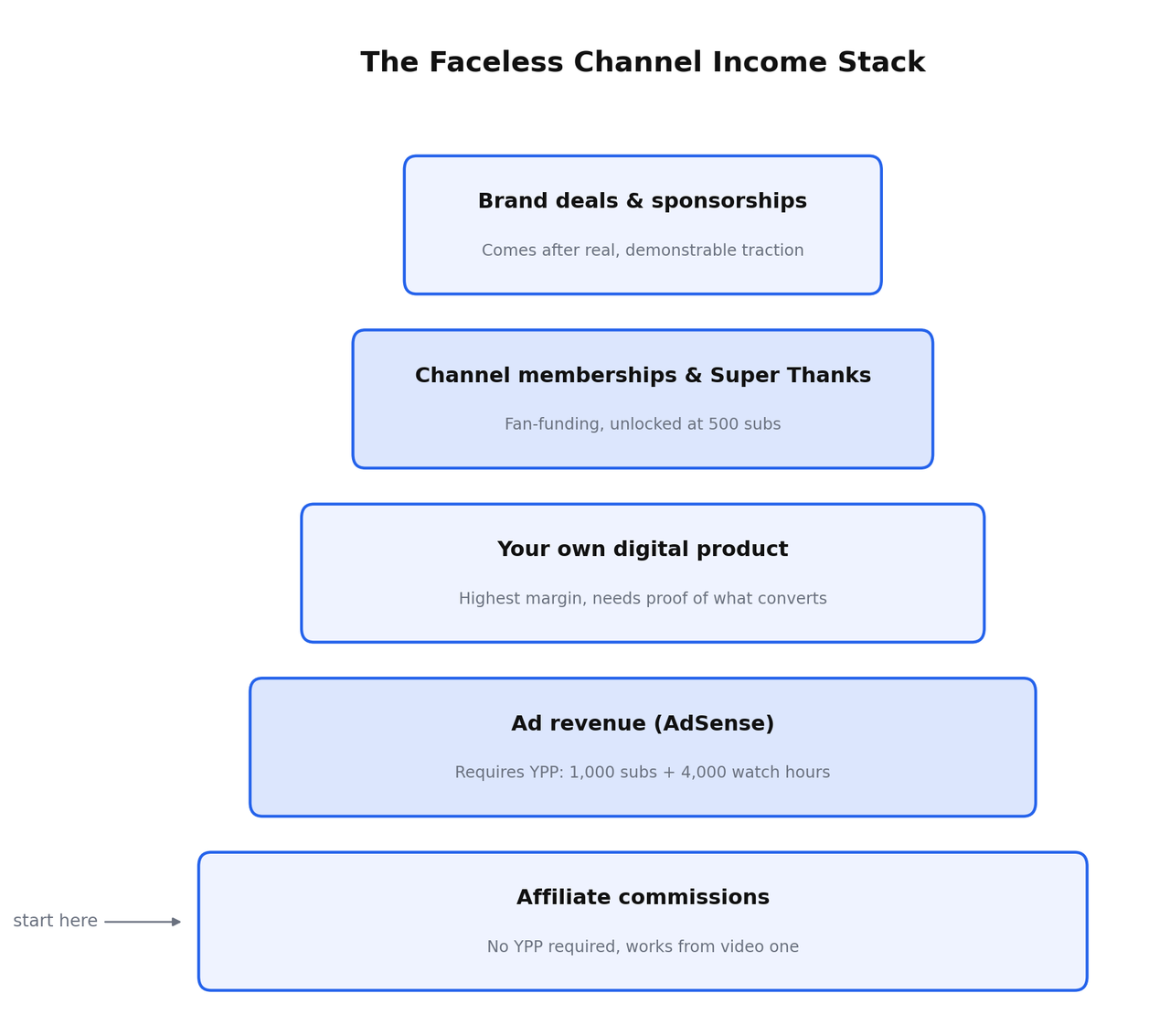
This is the monetization method most people think of first, and it's usually the slowest one to actually activate. It requires 1,000 subscribers and 4,000 valid public watch hours in the trailing 12 months (or the Shorts-specific path), followed by an application review, then clearing a minimum payout balance before your first deposit lands. Faceless channels are fully eligible, YouTube doesn't evaluate whether a face appears on screen for standard ad monetization. The practical downside is timing: for a new channel, this is commonly a six to twelve month path before it pays out anything.
Affiliate Marketing
This requires no Partner Program approval at all, no subscriber threshold, no watch hour requirement. You can place an affiliate link in your very first video's description, and if that video is aimed at a specific, real buyer-intent problem, it can generate a commission before you've come anywhere close to YPP eligibility. This is the fastest realistic income source available to a brand-new faceless channel, and it suits faceless content especially well, since review, comparison, and how-to formats, exactly the kind of content that converts affiliate traffic, don't need a face attached to be credible.
Your Own Digital Product
A course, template, ebook, or any digital product you sell directly carries the highest margin of any method on this list, since there's no platform fee eating into the payout the way ad revenue and some affiliate programs involve. Faceless channels are genuinely well suited to this, because credibility here comes from the content itself demonstrating real expertise, not from personal charisma or an established face. The catch: build this after you have some evidence of what your audience actually wants, not before. A product built on a guess sells worse than one built on a pattern you've already seen play out across your videos.
Brand Deals And Sponsorships
This is the one people assume requires a personal face and following, and it's only partially true. Brands care about audience fit and real view numbers far more than whether a creator's face is visible, plenty of faceless channels run sponsored segments successfully. What's genuinely harder without a personal brand is outbound pitching, brands are more likely to reach out once your channel already shows consistent, relevant traction than to respond to a cold pitch from an unproven, faceless account. Treat this as a method that arrives after real traction, not one to chase from day one.
Channel Memberships
Unlocked once your channel reaches YPP's first tier at 500 subscribers, channel memberships let viewers pay a recurring monthly fee for members-only perks, badges, custom emoji, member-only posts. This works technically fine without a face, but it suits channels with a returning, community-minded viewer base better than channels built primarily on one-off search traffic. A search-driven faceless channel where most viewers arrive from a single specific query, get their answer, and move on will see weaker membership conversion than a channel with a more habitual, returning audience. Worth having turned on regardless, just don't expect it to carry the bulk of your income if your traffic is mostly search-driven.
Super Thanks
A smaller, passive revenue source: viewers can pay for a one-time animated highlight on their comment as a way of saying thanks, on Shorts and long-form videos alike. It's not going to become a primary income source for most channels, but it costs nothing to turn on once you're eligible and adds a small, genuinely passive trickle on top of everything else.
YouTube Shopping And The Merch Shelf
YouTube lets eligible creators connect their own store or promote other brands' products directly through the platform's Shopping features. This is harder to make meaningful for a faceless channel built around a generic or broad topic, merchandise tends to sell better when there's a specific, recognizable brand identity behind it. It's more achievable than it sounds if your channel is built around a specific enough niche identity, think a distinct visual style or a specific recurring theme, rather than a completely generic topic with no identifiable brand of its own.
Licensing Your Own Footage Or Content
Less commonly discussed, genuinely real for certain niches: original footage, animations, or specific content you own can be licensed out to other creators, media outlets, or stock footage platforms. This applies unevenly, a channel built around original animation, unique location footage, or specialized visuals has real licensing potential. A channel built primarily on narrated stock footage and screen recordings doesn't have much original material worth licensing.
Selling The Channel Itself
Once a faceless channel has real, consistent income and a proven, repeatable content process behind it, it becomes a genuine sellable asset, arguably a more sellable one than a personality-driven channel, since the value lives in the content and positioning rather than in a specific person who'd need to stay involved for the channel to keep performing. I've covered the real mechanics of this, valuation, the sale process, and the risks, in whether and how you can actually sell a YouTube channel.
Which Of These Actually Suit A Faceless Channel Best
Affiliate commissions, your own digital products, ad revenue, Super Thanks, and eventually brand deals all translate cleanly to a faceless format with no real disadvantage. Channel memberships and merch work, but perform better with a returning, community-oriented audience than with a purely search-driven one. Licensing is real but applies narrowly, mostly to channels with genuinely original visual content rather than narrated stock footage.
How I'd Stack These As A Beginner Building From Zero
Start with affiliate commissions from your very first video, since it's the only method on this list that pays before you've built anything else. Apply for the YouTube Partner Program as soon as you're eligible and let ad revenue layer in as a second, steadier stream. Once you've published enough videos to see a real pattern in what your audience responds to, build your own digital product around that proven demand rather than a guess. Turn on channel memberships and Super Thanks as soon as you're eligible, they cost nothing to enable even if they stay a minor part of your income. Brand deals come last, once you have consistent, demonstrable traction a sponsor can actually evaluate.
Frequently Asked Questions
Can a faceless channel really earn from brand deals without showing a creator's face?
Yes, brands evaluate audience fit and view numbers more than whether a face appears on screen. What's harder without an established presence is outbound pitching, inbound interest tends to come more easily once a channel already shows real traction.
Which monetization method should a brand-new faceless channel focus on first?
Affiliate marketing, since it requires no Partner Program approval and can generate income from the very first video, well before ad revenue becomes available.
Do channel memberships work well for faceless channels?
They work technically, but tend to perform better for channels with a returning, community-oriented audience than for channels driven mostly by one-off search traffic, which is common for evergreen faceless content.
Is it worth turning on every monetization feature even if some earn very little?
Generally yes, for features with no real downside, like Super Thanks and channel memberships. They cost nothing to enable and add incremental income on top of your primary sources.
Where To Actually Start
If you're building a faceless channel from nothing, don't wait for ad revenue eligibility to start earning. Add a real affiliate link to your very first video, apply for the Partner Program the moment you qualify, and build your own product only once you have real evidence of what converts. Stack these deliberately in that order rather than waiting for one to be perfect before starting the next.
For the official specifics on each monetization feature and current eligibility requirements, YouTube's own monetization overview and the Commerce Products monetization policies are worth checking directly, since eligibility details can shift. If affiliate income is going to be part of your stack, the FTC's disclosure guidance for social media endorsements is required reading before your first sponsored or affiliate video goes live.
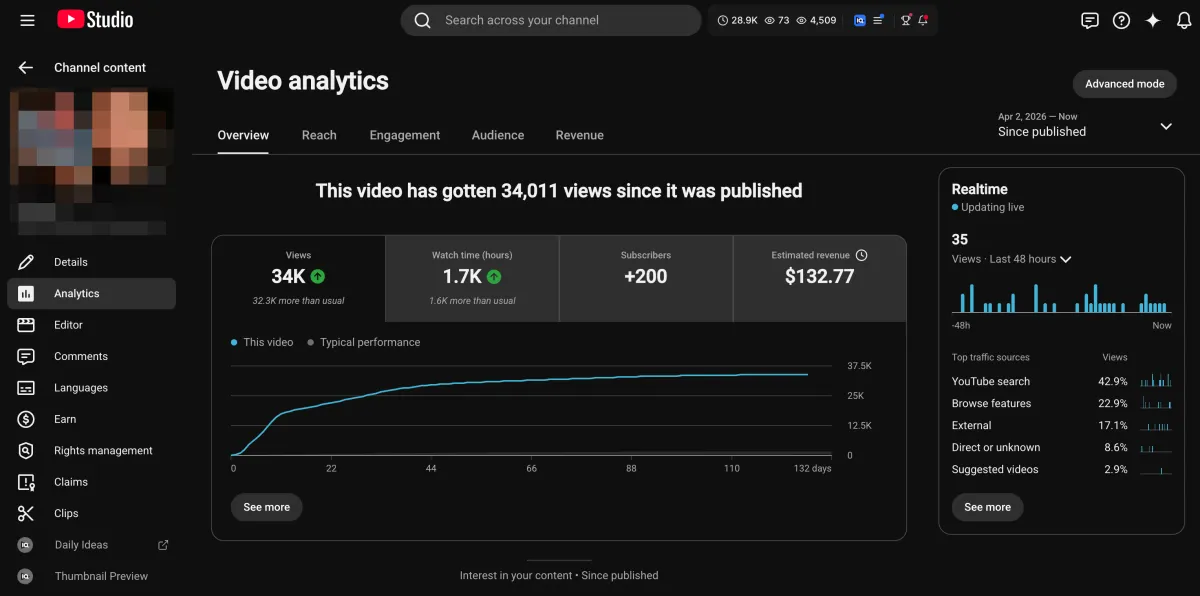
Learn how I turned a $132.77 video into $1000+ per month asset
Full case study on how you can replicate my success with YouTube SEO strategy.
Free downloadThe Zero Audience System
Build permanent YouTube income without a camera or an audience
The full methodology, 31 lessons plus bonuses. Limited spots.