
The core mechanics of starting from zero haven't changed, specific over broad, evergreen over trending, search over browse, and I've covered that full starting process in detail elsewhere. What's genuinely different in 2027 is the environment you're starting into: a higher Partner Program threshold for new applicants, a flood of low-effort AI-generated content competing for the same searches, and continued enforcement against templated, mass-produced videos. Building something successful now means clearing a higher bar than it took even a year or two ago, and understanding exactly where that bar moved changes how you should plan.
What Hasn't Changed
The foundational approach to building from nothing, choosing a specific, searchable problem instead of a broad topic, building evergreen content that keeps earning for years instead of trend-chasing content that spikes and fades, and tracking results from your first video onward, still works exactly as it did before. If you haven't read the complete starting process, that's covered in full in how to build an audience from zero on YouTube. This article picks up from there and focuses specifically on what's different about doing this successfully in 2027's environment.
What's Actually Different About 2027
Starting February 1, 2027, new applicants to the YouTube Partner Program need 8,000 watch hours or 20 million Shorts views, double the previous 4,000 hours or 10 million views. Channels already accepted before that date keep their existing status. If you're starting today with monetization eligibility still ahead of you, plan around this higher bar rather than the older, lower threshold you may have read about elsewhere.

At the same time, the content landscape a new channel competes inside has gotten noticeably more crowded with low-effort material. Independent research from mid-2026 found that a meaningful share of videos recommended to new YouTube accounts fell into a broader category of low-effort, mass-produced content, and enforcement against templated, repetitive uploads has continued, with real, large-scale channel terminations documented through the year. Neither of these targets specific formats like faceless content directly, they target low-effort production specifically, but the practical effect is a more saturated, more scrutinized environment for anyone starting from zero right now.
Why More Competition Actually Raises The Value Of Doing This Right
A crowded field of low-effort, templated content doesn't make genuine, well-researched work less valuable, it makes it stand out more clearly by comparison. When a large share of what's competing for a given search term is thin or interchangeable, a video that actually resolves the query completely has an easier time distinguishing itself than it would in a field where every competitor was already doing careful, specific work. The bar for volume has risen. The bar for genuine quality within that volume hasn't moved nearly as much, which is exactly why building the right way still works even as the surrounding landscape gets noisier.
The Success Factors That Actually Separate Thriving Channels From Stalled Ones
Beyond the foundational specific-and-evergreen approach, a few factors matter more in this specific environment than they did a couple of years ago. Genuine differentiation matters more now, since generic, templated coverage of a topic is easier to find than ever, a specific angle or distinguishing structure separates a channel from the noise more than it used to. Diversified monetization matters more too, relying purely on ad revenue in an increasingly competitive attention environment is a thinner position than stacking affiliate income, a product, or brand deals alongside it. And genuine originality in production, real scripts, real editing decisions, matters as a safeguard against the same enforcement patterns sweeping up low-effort content generally, not because faceless or AI-assisted production is itself the target.
How The Higher 2027 Threshold Changes Your Early Planning
If you're starting today and haven't yet been accepted into the Partner Program, plan your first few months assuming you'll need to clear the higher 8,000-hour or 20-million-Shorts-view bar, not the older figures. This doesn't change the core strategy, it changes the realistic timeline: expect a longer pre-monetization runway than someone who started and got accepted before the change takes effect, and don't rely on affiliate income alone during that stretch, build it in from your very first video rather than waiting for ad revenue to arrive.
A Success Checklist For This Specific Moment
- Build your content around specific, evergreen problems, the foundational approach still works and matters more as generic content gets more crowded.
- Add a real affiliate link or offer from your first video, since your pre-monetization runway may be longer under the new threshold.
- Make sure every video reflects genuine research and editing decisions, not a repeatable template, both because it performs better and because it protects you from enforcement aimed at low-effort mass production.
- Track real search demand before committing to a topic, since a crowded field makes picking a genuinely winnable keyword more important, not less.
- Plan your monetization stack, ad revenue plus at least one other income source, rather than depending on a single stream that may take longer to activate than it used to.
Frequently Asked Questions
Does the 2027 Partner Program change affect channels already monetized?
No. The higher threshold, 8,000 watch hours or 20 million Shorts views, applies only to new applicants starting February 1, 2027. Channels already accepted keep their existing status.
Is it harder to succeed on YouTube in 2027 than it was a few years ago?
The entry bar for monetization is higher, and the field is more crowded with low-effort content, but the core strategy that separates a successful channel from a stalled one, specific, evergreen, genuinely researched content, hasn't changed and arguably stands out more clearly now.
Should I rely on ad revenue as my primary income plan in 2027?
Given the longer runway to Partner Program eligibility under the new threshold, building in affiliate income or another revenue source from the start is a more resilient plan than waiting on ad revenue alone.
Does more AI-generated content on YouTube mean less opportunity for new creators?
Not necessarily. A more crowded field of low-effort content actually makes genuinely researched, specific work easier to distinguish by comparison, rather than harder.
Where To Actually Focus
Don't let the higher 2027 threshold or a more crowded content landscape change the fundamentals, they still work, and arguably work better as an increasing share of competing content gets thinner and more templated. What should change is your planning around timeline and income diversification, expect a longer runway to monetization eligibility, and build more than one income stream in from the start rather than waiting on ad revenue to arrive. For the deeper mechanics of what's actually driving current enforcement and how to make sure your own content stays clearly on the right side of it, see can faceless channels be monetized in 2027.
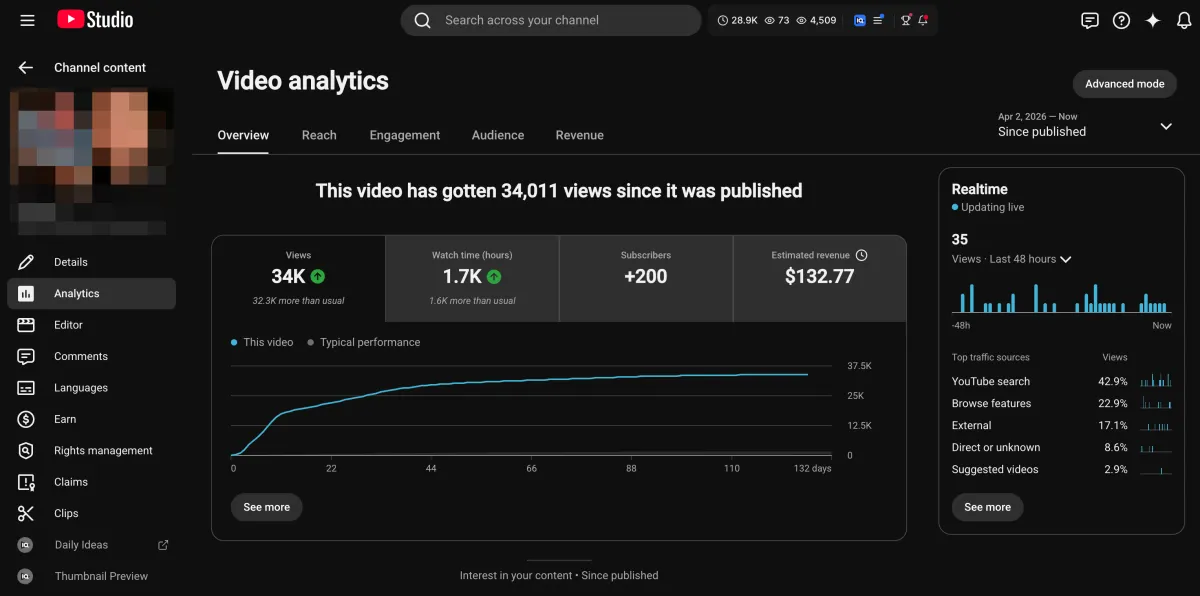
Learn how I turned a $132.77 video into $1000+ per month asset
Full case study on how you can replicate my success with YouTube SEO strategy.
Free downloadThe Zero Audience System
Build permanent YouTube income without a camera or an audience
The full methodology, 31 lessons plus bonuses. Limited spots.