Most guides on this topic tell you to open a keyword tool, filter by volume, and pick whatever has a low difficulty score. That misses the step that actually matters most: verifying competition by watching what's currently ranking, not just trusting a number. Here's the complete process, including a real, live example pulled directly from keyword data while writing this, showing exactly how much difficulty scores can vary between nearly identical phrases.
What "Low Competition, High Traffic" Actually Means
High traffic doesn't mean millions of searches. It means enough real demand for a channel your size to realistically capture a meaningful share of it. A keyword with 500 monthly searches can be a genuinely strong target for a small channel, while a keyword with 50,000 searches might be worthless if you can't compete for it.
Low competition isn't just a difficulty score either. A tool's difficulty rating estimates how hard a term is to rank for based on the sites and channels currently occupying page one. That estimate can be wrong, outdated, or based on a snapshot that's already shifted. The real test is watching the actual videos ranking right now: how recent they are, how thorough they are, and how big the channels behind them actually are.
Step 1: Start With A Topic You Actually Understand
Skip generic "trending topic" lists. Pick something inside your niche you could speak on for ten minutes without notes. Keyword research works from a real seed topic outward, not from a list of unrelated ideas you're hoping happen to work.
Step 2: Pull Real Suggestions, Not Guesses
Type your seed topic into YouTube's own search bar and read the autocomplete suggestions first. That's free, direct signal from the platform itself. Then run the same seed through a proper keyword tool, one that shows real search volume and a difficulty estimate side by side, rather than relying on autocomplete alone. Autocomplete tells you what people type. A keyword tool tells you how many people are typing it and how contested it already is.
Step 3: Filter By Volume Before Difficulty
Set a minimum volume threshold first, based on your channel's current size, then filter by difficulty within that shortlist. Filtering by difficulty first tends to surface a flood of near-zero-volume terms that technically qualify as "low competition" but aren't worth making a video about at all. Volume defines whether a keyword is worth pursuing. Difficulty defines whether it's realistic right now.
Step 4: Verify Competition By Watching The Actual Top Results
This is the step most guides skip entirely. Before committing to a keyword, search it directly on YouTube and open the top three to five results. Check how recently they were uploaded, since an old top result can mean the field is genuinely stale and beatable. Check how thorough each video actually is, since a shallow, incomplete video ranking well is a real opportunity, not a sign the space is locked up. Check the channel size behind each result. If a keyword's top results are all small channels with thin, dated content, the difficulty score undersold how open that keyword actually is.
A Real, Live Example
Rather than describe this abstractly, here's what actually turned up pulling live keyword data around a single seed topic, meal prep, while writing this article.
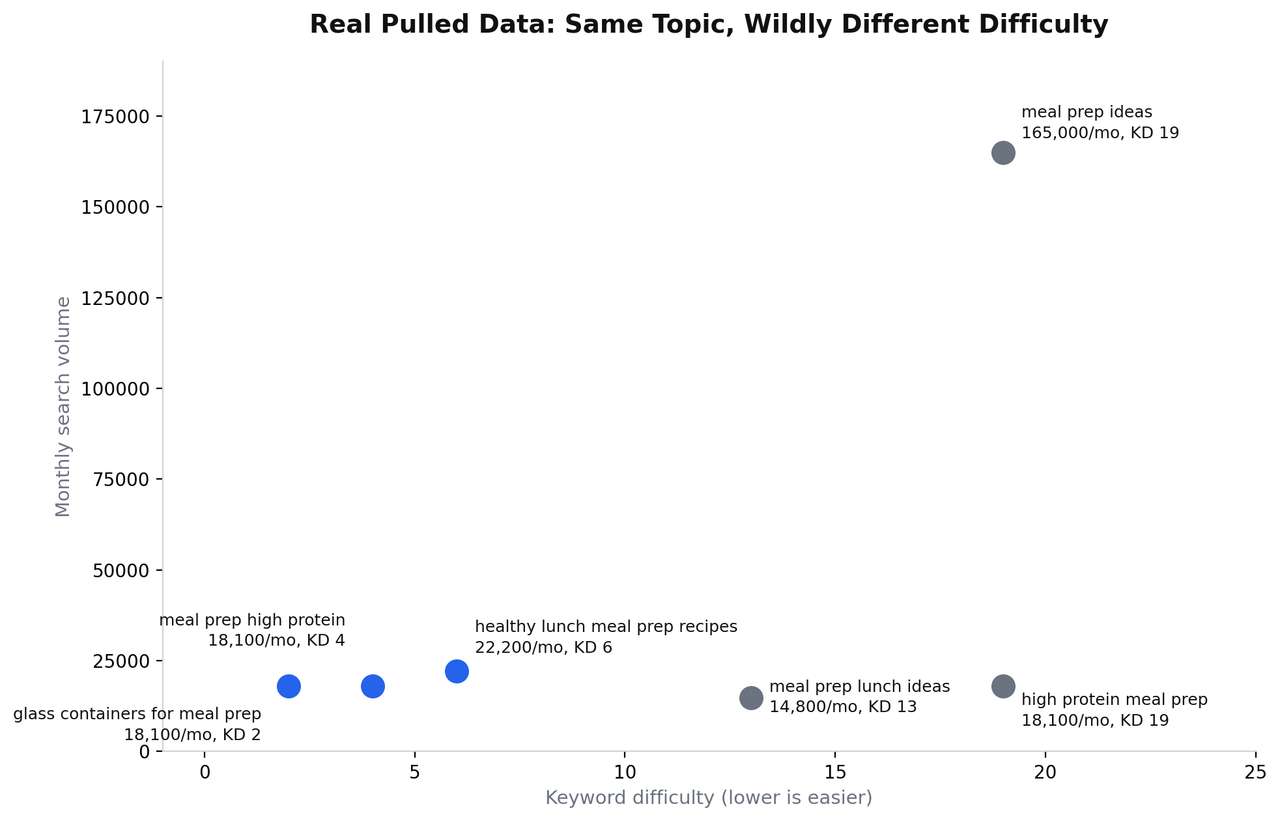
Look at the gap between two nearly identical phrases: "high protein meal prep" scores a difficulty of 19, while "meal prep high protein," the same search intent with the words reordered, scores a difficulty of 4, at the exact same 18,100 monthly search volume. "Glass containers for meal prep" pulls 18,100 searches a month at a difficulty of just 2. "Healthy lunch meal prep recipes" pulls 22,200 searches at a difficulty of 6. All of this sits inside a topic, meal prep, that looks completely saturated at a glance.
The practical lesson: word order and phrasing genuinely change difficulty scores, sometimes dramatically, even when the underlying search intent is identical. Never settle for the first phrasing of an idea. Pull three or four variations of the same concept before deciding a topic isn't worth pursuing.
Step 5: Multiply One Good Keyword Into Dozens Using A Repeatable Variable
Once you find a keyword structure that works, check whether it repeats across a natural variable, a specific ingredient, a specific location, a specific product category. "Best [ingredient] meal prep recipes" or "[specific container type] for meal prep" can each generate a dozen or more individually low-competition variations from one proven structure. This is the same pattern behind entire evergreen content libraries: one winning format, applied across every reasonable variation of a single variable, rather than reinventing a new idea for every video.
Common Mistakes That Waste This Process
Chasing a difficulty score of zero regardless of volume wastes time on keywords nobody is actually searching. Trusting a difficulty score without watching the current top results skips the verification step that catches stale or weak competition tools can't detect. And ignoring intent entirely, targeting a high-volume term that's purely informational when your video needs to convert into a sale or a subscriber, sets you up for traffic that doesn't actually help your channel.
A Repeatable Weekly Routine
- Pick one seed topic from your niche you haven't researched yet.
- Pull autocomplete suggestions, then run the same seed through a real keyword tool.
- Filter by a volume floor that matches your channel's current size, then sort by difficulty.
- Take your top five candidates and manually check the current top results for each one on YouTube itself.
- Test two or three phrasing variations of your best candidate before finalizing a title.
For the specific free tools worth using at each step, I've broken down exactly which ones and why in the best free YouTube SEO tools, tested and ranked. And once you've found a strong keyword, the title and metadata decisions that actually make it convert are covered in YouTube SEO best practices for title, description, and tags.
Frequently Asked Questions
What counts as "high traffic" for a small YouTube channel?
It depends on channel size, but a few hundred to a few thousand monthly searches can be genuinely valuable for a smaller channel, since the goal is capturing a meaningful share of real demand, not chasing the highest possible volume number.
Can two nearly identical keywords really have different difficulty scores?
Yes, and often significantly. Word order, phrasing, and even singular versus plural forms can shift a difficulty score by a wide margin at the same search volume, which is why testing variations matters more than trusting the first phrasing you try.
Should I trust a keyword tool's difficulty score on its own?
Treat it as a starting filter, not a final answer. Verifying by watching the actual current top-ranking videos catches stale or weak competition that a difficulty score alone can miss.
How many keyword variations should I check before picking one?
At least three or four phrasings of the same core idea. The real example above shows how much difficulty scores can shift between phrasings that mean exactly the same thing to a searcher.
The Actual Takeaway
Low competition, high traffic keywords aren't rare. They're often hiding in plain sight, one word-order change away from a heavily contested version of the exact same idea. Pull real data, test multiple phrasings of your best ideas, and verify every shortlisted keyword by watching what's actually ranking before you commit a video to it. That combination catches opportunities a difficulty score alone will consistently miss.
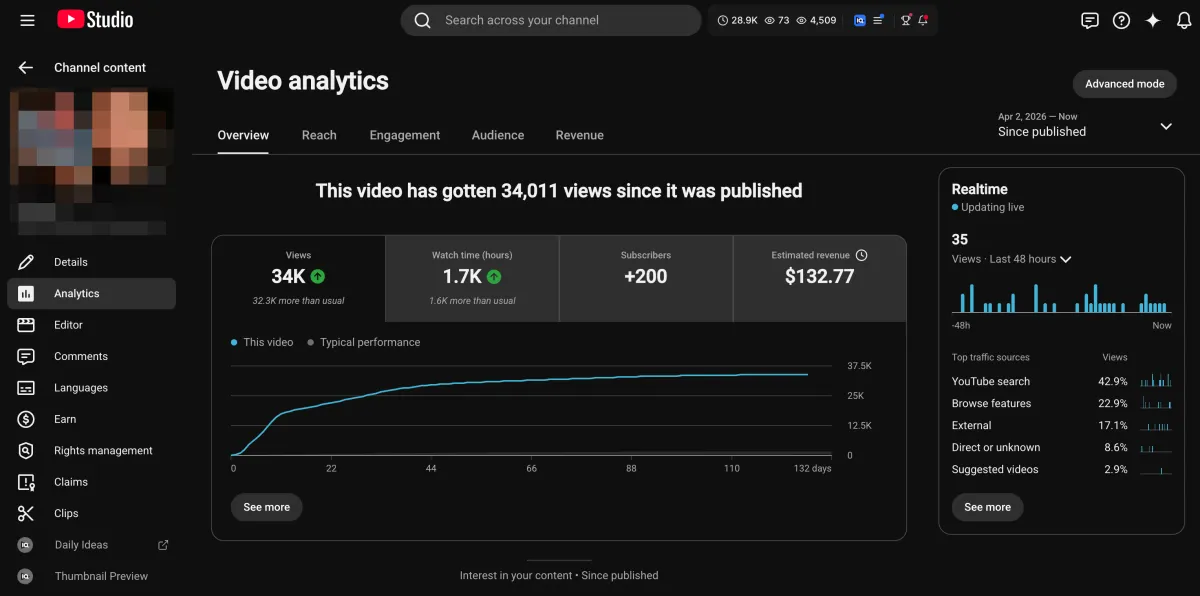
Learn how I turned a $132.77 video into $1000+ per month asset
Full case study on how you can replicate my success with YouTube SEO strategy.
Free downloadThe Zero Audience System
Build permanent YouTube income without a camera or an audience
The full methodology, 31 lessons plus bonuses. Limited spots.