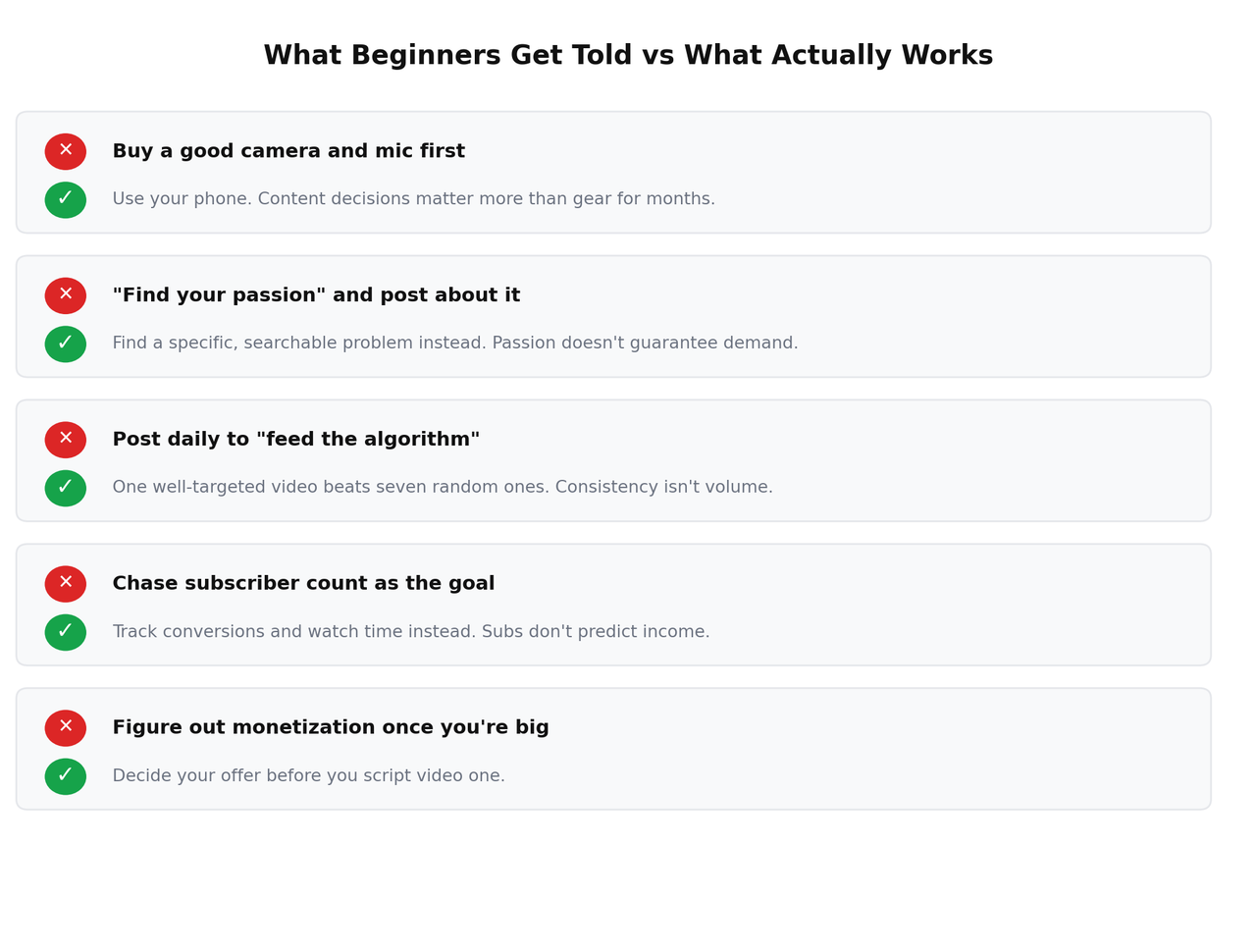
Most beginner guides tell you to buy a decent camera, find your passion, and post consistently. None of that determines whether a new channel actually goes anywhere. What determines it is far less exciting: picking a specific, searchable problem, tracking results from video one, and surviving three discouraging months where almost nothing happens. Here's the version of this guide built around what actually matters, not what sounds inspiring in a thumbnail.
What Nobody Tells You About The First 90 Days
Expect close to nothing for the first two to three months, regardless of how good your content is. This isn't a sign you're doing something wrong. YouTube's systems need real data before they can confidently recommend anything, and a brand-new channel simply doesn't have that data yet. Most people who quit do it right around month two, which is usually the exact point a channel built correctly is just starting to generate its first real signals. Knowing this in advance is the difference between quitting at the worst possible moment and pushing through it.
Step 1: Skip The Equipment Debate Entirely
Your phone's camera and a quiet room are enough for the first several months of content. The equipment question is a distraction dressed up as preparation, and it's one of the easiest ways to spend real money before you've confirmed anyone wants to watch what you're making. Revisit gear once you have actual videos published and real feedback to act on, not before.
Step 2: Don't "Find Your Passion," Find A Specific Problem
Passion doesn't create search demand. A topic you genuinely care about is a fine starting point, but the actual decision that matters is narrower: what specific, well-defined problem inside that broader interest are people actively searching for an answer to right now. "I love cooking" isn't a channel. "How to meal prep on a $50 weekly budget" is a specific enough angle to actually target.
Step 3: Decide What You're Building Toward Before You Upload Anything
Know what a video is actually pointing toward, ad revenue, an affiliate link, your own product, before you script it, not after it's already published. A video built around a clear destination converts. A video made first and monetized as an afterthought rarely does, because the structure and calls to action needed to convert were never built in from the start.
Step 4: Set Up Tracking Before Your First Video, Not After
This is the step almost every beginner skips, and it's genuinely one of the most costly omissions. Before you publish anything, know how you'll measure whether a video actually worked, a tracked affiliate link, a clear call to action, or simply a habit of checking YouTube Studio's traffic source data regularly. Publishing for months without tracking anything means you're guessing at what's working long after you could have known for certain.
Step 5: Actually Create The Channel
Set up a Google account dedicated to this if you don't have one already, then create a Brand Account rather than running the channel off your personal account directly, this keeps things cleanly separated and makes adding collaborators or transferring ownership easier later. Don't overthink the channel name, it matters far less than people assume for a channel built around search-driven, specific content rather than personal branding. Add simple channel art and a clear About section, then move on, a polished identity with zero videos published helps nobody.
Step 6: Publish Your First Video Using A Structure That Already Works
Don't start from a blank page. Study a few successful videos in your specific topic area, not to copy them, but to identify the actual title and content structure they used, then apply that same proven structure to your own, different topic. Reinventing the format for every video wastes time better spent on research and content quality.
What Nobody Tells You About Subscriber Count
Subscriber count is a weak predictor of whether a channel is actually working. A channel with a few hundred subscribers and consistent, tracked conversions can genuinely out-earn a channel with tens of thousands of subscribers and no real monetization system behind it. Treat subscriber count as a side effect of good content, not the actual goal you're optimizing for.
What Nobody Tells You About The Algorithm
There isn't one single algorithm. YouTube runs separate systems for Search, the Home feed, Suggested videos, and Shorts, each weighing different signals. A video built around a specific search term succeeds by matching that search intent completely, not by chasing whatever the Home feed happens to be recommending that week. Understanding which system you're actually trying to succeed in changes what "good content" even means for your specific video.
Common Beginner Mistakes That Actually Kill Channels
Re-recording the same video repeatedly chasing a perfection that doesn't move the needle, a decent published video beats a perfect unfinished one every time. Picking a topic because it sounded interesting rather than checking whether real search demand exists behind it. Buying expensive gear or software before publishing a single video, spending money to solve a problem you don't have yet. And quitting somewhere in the first two months, right before a channel built correctly typically starts showing its first real signals.
A Realistic First 90-Day Plan
- Days 1-3: Set up the channel, choose your broad topic area, and list ten to fifteen specific problems within it worth covering.
- Days 4-7: Pick your first specific topic, set up basic tracking, and script your first video around a clear destination, not just information for its own sake.
- Week 2: Publish your first video. Don't judge its performance yet, there isn't enough data after one upload to conclude anything.
- Weeks 3-8: Publish consistently, each video aimed at a different specific problem from your list, and start watching for any early signal, however small.
- Weeks 9-12: Review what you've learned so far. Lean into whichever specific topics or formats showed the strongest early signal, and resist judging the channel's overall potential this early regardless of how it feels.
For the technical setup worth handling before your very first upload specifically, I've covered that in more depth in how to warm up a new YouTube channel. And for the deeper mechanics behind why specific, evergreen content outperforms broad or trending topics for a brand-new channel, that's covered in full in how to build an audience from zero on YouTube.
Frequently Asked Questions
Do I need expensive equipment to start a YouTube channel in 2026?
No. A phone camera and a quiet room are sufficient for the first several months. Equipment decisions matter far less than topic selection and content quality at the beginning.
How long does it take to see real results from a new channel?
Typically two to three months before any meaningful signal appears, with more consistent traction often developing between months three and six for channels built around specific, evergreen topics.
Should I post every day when starting out?
No. A sustainable, consistent schedule with well-targeted, specific content beats daily uploads made just to hit a frequency target. Quality of targeting matters more than raw volume.
Is it better to pick a broad niche or a specific one when starting?
A specific, well-defined problem within a broader topic area works better than either a completely broad niche or an overly narrow one with no room to grow. It gives you enough distinct video ideas while avoiding direct competition with much larger, established channels.
Where To Actually Start
Set up the channel this week, pick one specific topic from your broader interest, and publish your first video before the week is out, even an imperfect one made entirely on your phone. The gap between people who eventually build something real and people who don't usually comes down to whether they published something while still figuring it out, not whether they waited until everything felt ready first.
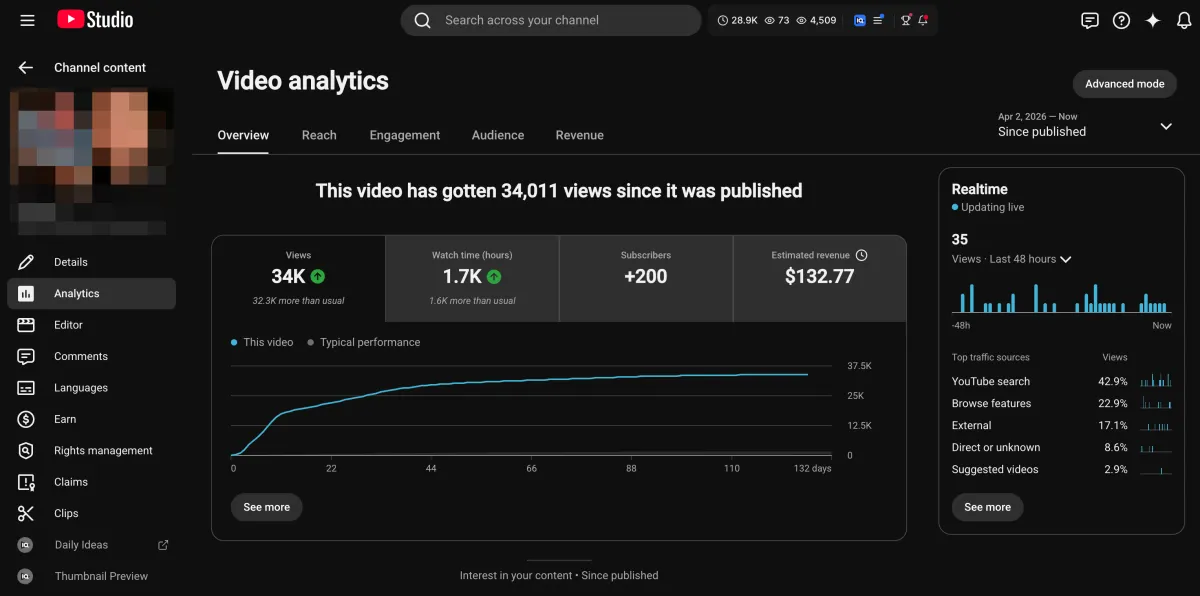
Learn how I turned a $132.77 video into $1000+ per month asset
Full case study on how you can replicate my success with YouTube SEO strategy.
Free downloadThe Zero Audience System
Build permanent YouTube income without a camera or an audience
The full methodology, 31 lessons plus bonuses. Limited spots.