There's no single best platform here. Each one wins for a different goal. YouTube wins on reach, brand deals, and total income potential. Kick pays creators the largest share per subscriber. Rumble offers an alternative audience and a licensing model YouTube doesn't have. Picking the right one depends on what you're actually trying to build, not which platform sounds the most exciting this year.
Here's the real breakdown: how each platform pays creators, who each one actually fits, and why most serious creators end up using more than one at the same time.
What These Three Platforms Actually Are
YouTube is a video platform first, with live streaming as one feature inside a much larger system. It handles uploads, Shorts, and live content under one roof, and its discovery engine reaches more people than the other two combined.
Kick is built primarily for live streaming. Long-form video upload and on-demand discovery aren't its focus the way they are on YouTube or Rumble. Backed by the gambling platform Stake, Kick entered the market with an aggressive creator-friendly revenue split as its core pitch.
Rumble positions itself as an alternative video platform, with a heavy lean toward political and news commentary. Moderation is looser than YouTube's, and the platform has built real infrastructure around licensing creator videos out to news networks and publishers, a monetization path the other two don't offer.
Revenue Split, Side By Side
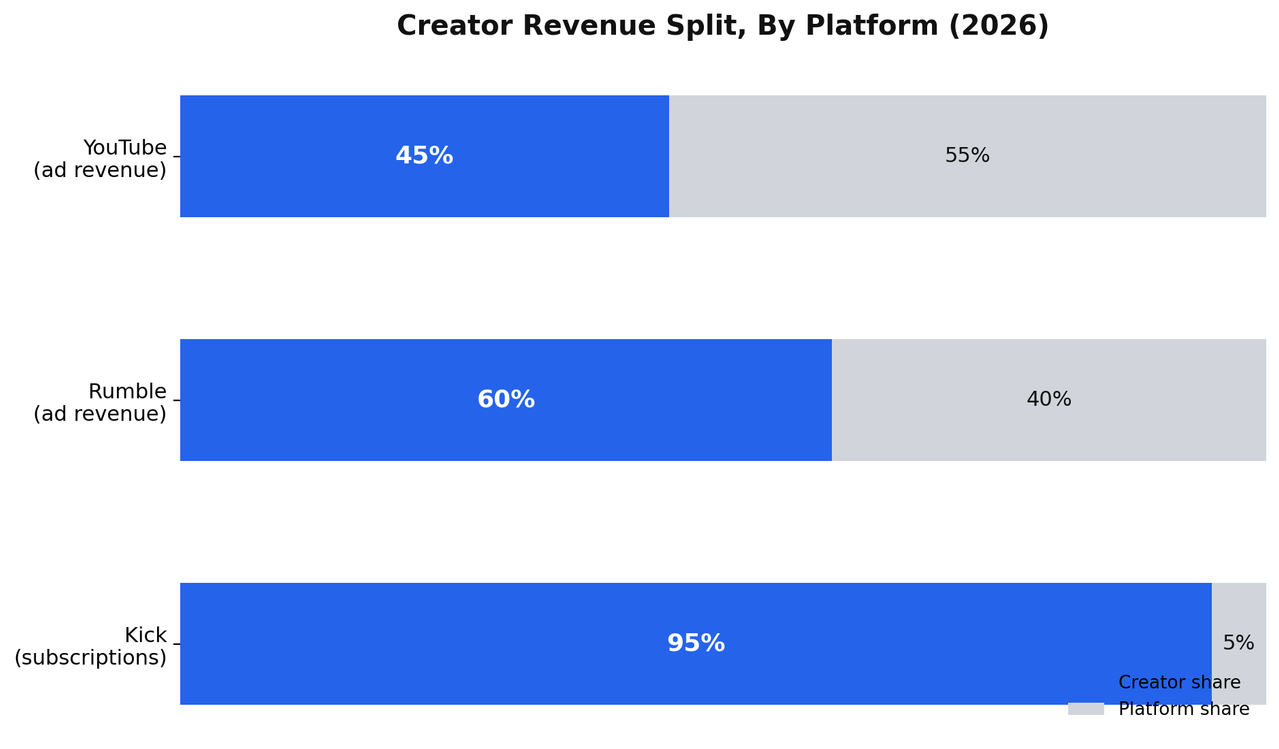
Raw percentages tell part of the story, and they're worth seeing directly before anything else.
| Platform | Creator share | Revenue type |
|---|---|---|
| Kick | 95% | Subscription revenue only, no traditional pre-roll ads |
| Rumble | 60% | Ad revenue, plus separate licensing income |
| YouTube | 45% | Ad revenue, plus memberships, Super Thanks, and merch |
Kick's number looks dramatic on its own, but it only applies to subscriptions. Kick doesn't run standard pre-roll advertising the way YouTube and Rumble do, so that 95% comes from a narrower revenue base than the other two platforms offer. A smaller slice of a bigger pie can still beat a bigger slice of a smaller one, which is exactly why total audience size matters just as much as the percentage itself.
Kick In Detail
Kick's headline feature is real: streamers keep 95 cents of every dollar a subscriber pays, compared to roughly 50 cents on Twitch's standard split. A Creator Incentive Program adds hourly pay for qualifying streamers, though it typically requires channel verification and a subscriber count around 1,500 or higher before it kicks in.
Two honest limitations matter here. Stream stability has trailed behind more established platforms in independent reviews. Kick's association with gambling and casino content, given its Stake.com backing, has also shaped its reputation and its advertiser relationships in ways worth knowing before building a channel there.
Rumble In Detail
Rumble runs a 60/40 ad revenue split in the creator's favor, better than YouTube's standard cut. What actually sets Rumble apart is its licensing system. Creators can choose Exclusive, Non-Exclusive, Rumble Only, or Personal Use terms for their videos, and Rumble pitches licensed content to media outlets and publishers on the creator's behalf. A video picked up this way can generate ongoing revenue for years without any additional work, sometimes under agreements that run for decades.
Rumble Premium, a $9.99 monthly subscription tier launched more recently, splits revenue among creators based on watch-time share, alongside a direct tipping feature called Rumble Rants. A Creator Partnership Program now offers top performers revenue shares as high as 90%, though it requires at least one licensed video to qualify.
The tradeoff is discoverability. Rumble's roughly 70 million monthly active users skew heavily toward political and news content, and finding a new audience organically is meaningfully harder than on YouTube. Rumble has also built a reputation for defending creators against false copyright claims more aggressively than other platforms, a real, specific advantage for anyone who has dealt with a wrongful strike before.
YouTube In Detail
YouTube's ad split sits at 45% to the creator, the lowest percentage of the three. What makes up for it is scale and surface area. No other platform reaches as many viewers, and no other platform offers as many separate ways to earn: standard ad revenue, channel memberships, Super Thanks, a merch shelf, and brand deals that are easier to land specifically because of YouTube's reach.
Two real downsides come up constantly in creator feedback: a heavier ad load than viewers see elsewhere, and demonetization or policy decisions that can feel inconsistent or unexplained. Partner Program eligibility still requires 1,000 subscribers and 4,000 watch hours, or 10 million Shorts views, before ad revenue turns on at all.
Which Platform Actually Wins For Different Goals
Pick YouTube if reach, brand deal potential, and total income ceiling matter most to you, its scale beats a higher percentage on a much smaller audience almost every time. Pick Kick if you're a live streamer specifically chasing the highest per-subscriber payout and you're comfortable with a smaller, rougher platform still building its reputation. Pick Rumble if you've been demonetized or restricted elsewhere, your content leans political or news-focused, or you want a licensing revenue stream that doesn't exist on the other two platforms at all.
Why Most Serious Creators Use More Than One
Cross-posting has become the default strategy for a real reason. YouTube supplies reach and brand-deal credibility. Rumble adds backup income and a licensing path that keeps paying without new uploads. Kick makes sense as a live-specific add-on for creators already streaming regularly elsewhere. None of the three requires exclusivity to use the others, so treating this as an either-or decision usually costs more than it saves.
A Practical Way To Decide
- Start with YouTube if you're building from zero. Its combination of reach and monetization surfaces still gives new creators the best odds of building something sustainable.
- Add Rumble once you have an existing video library, especially if any of it touches political, news, or commentary topics that could realistically get picked up through licensing.
- Add Kick only if live streaming is already a core part of your content, not as a first platform on its own.
- Revisit this decision every few months. Creator economics on newer platforms like Kick shift quickly, and today's numbers won't necessarily hold a year from now.
Frequently Asked Questions
Does Kick's 95/5 split mean creators actually earn more overall than on YouTube?
Not automatically. The split only applies to subscription revenue, and Kick's total audience is far smaller than YouTube's. A creator can earn a higher percentage per subscriber on Kick while still earning less overall than on a platform with a much larger audience.
Is Rumble a good replacement for YouTube?
For most creators, no, it works better as a supplement. Its ad split and licensing model are genuinely creator-friendly, but discoverability is harder, and its audience skews toward a specific content niche rather than reflecting YouTube's broader reach.
Can I stream or upload to all three platforms at once?
Yes. None of the three requires exclusivity, and cross-posting is common among creators who want YouTube's reach alongside Rumble's licensing income or Kick's live-specific payout structure.
Which platform is safest from demonetization?
No platform is fully immune, but Rumble's looser moderation and stronger stance on defending creators against false copyright claims make it a common landing spot for creators who've had trouble on YouTube specifically.
The Real Takeaway
Choose based on what you're actually optimizing for, not which split looks the biggest on paper. If you're starting today with no existing audience, YouTube's reach and multiple monetization surfaces still make it the strongest first platform. Layer Rumble and Kick on top once you understand which specific gap, licensing income, political-content reach, or live-streaming payout, actually matters for your content. For the full picture of every realistic way to earn from a YouTube channel specifically, I've covered that in detail in faceless YouTube channel monetization, every way to actually get paid.
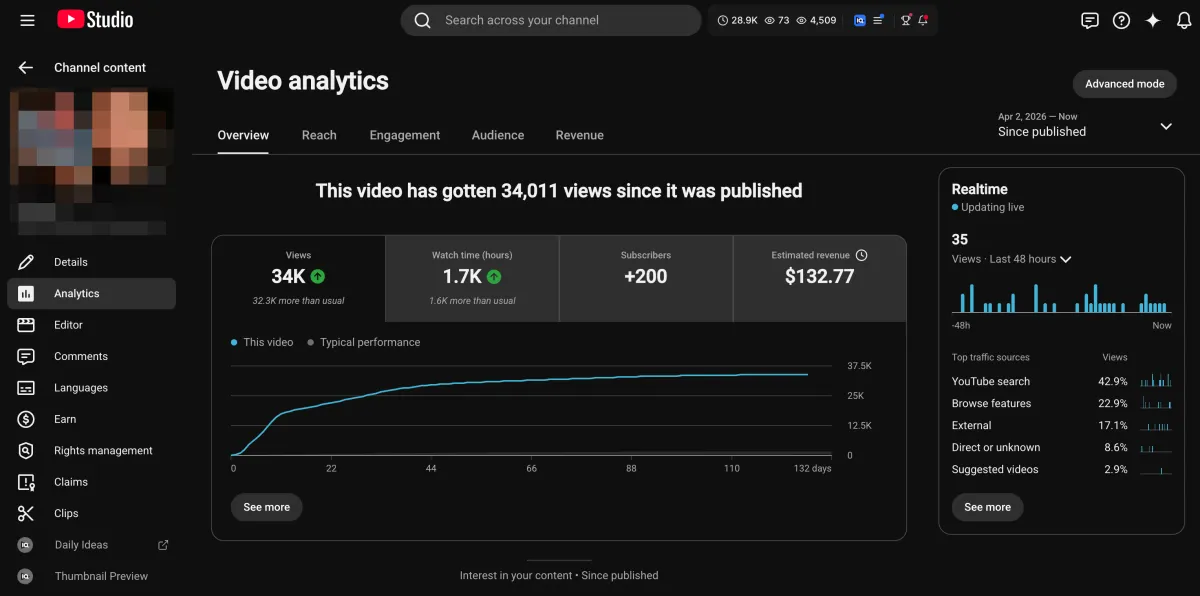
Learn how I turned a $132.77 video into $1000+ per month asset
Full case study on how you can replicate my success with YouTube SEO strategy.
Free downloadThe Zero Audience System
Build permanent YouTube income without a camera or an audience
The full methodology, 31 lessons plus bonuses. Limited spots.