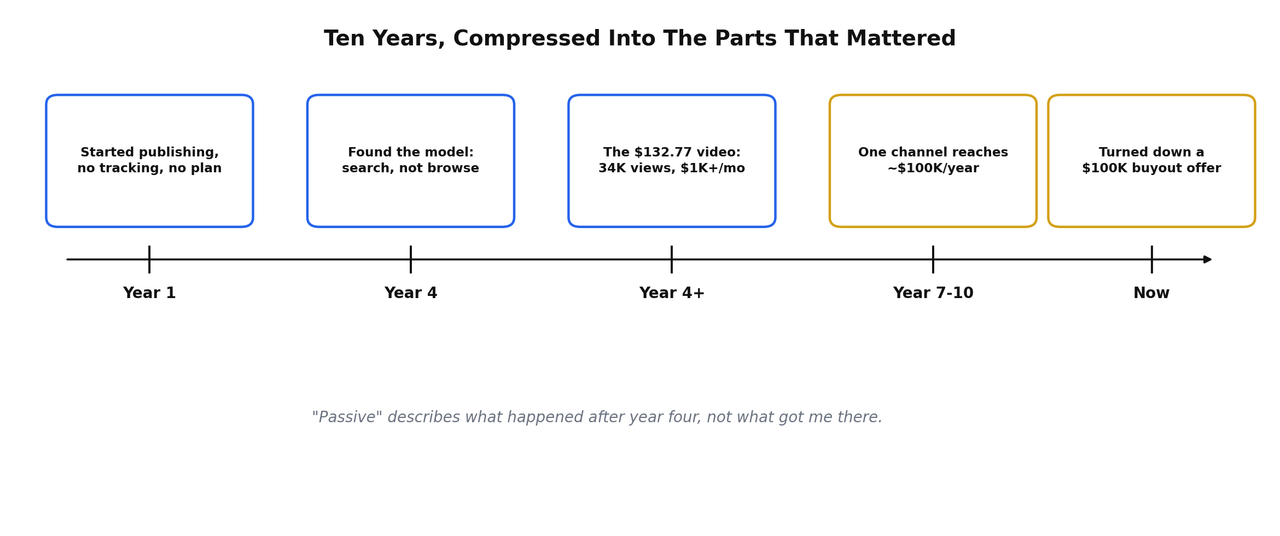
Before the story, the honest correction most articles with this title skip: none of this was passive at the start. "Passive" describes what a video does after it's built and published, not what it takes to get there. I spent roughly ten years and over 4,000 videos across two channels before one channel settled into something that genuinely earns without daily attention, and about four of those years went by before I found the actual model that made it work. Here's what that path actually looked like, and what it really takes to get somewhere similar.
The Honest Definition Of "Passive" Before Anything Else
Passive income from YouTube means a video, once published, keeps earning without requiring new, ongoing work from you, not that the income arrives without ever having done real work in the first place. Every dollar a search-driven video earns two years after publishing is the payoff of research, scripting, and structuring decisions made once, up front. The work front-loads. The income doesn't start passive, it becomes passive, and only for the videos actually built to hold up that long.
How It Actually Started
The first stretch of this, roughly the first 2,000 videos, was published almost entirely blind. No tracking, no clear sense of which videos were actually converting into anything, just a steady habit of publishing across two channels. That volume taught me something tracking alone couldn't have: which title structures held attention, which formats felt like they worked, patterns you only start noticing once you've made enough of them. It took about four years of that before the actual mechanism, the thing that separates a video that spikes and fades from one that keeps earning, became obvious.
The Video That Changed How I Thought About This
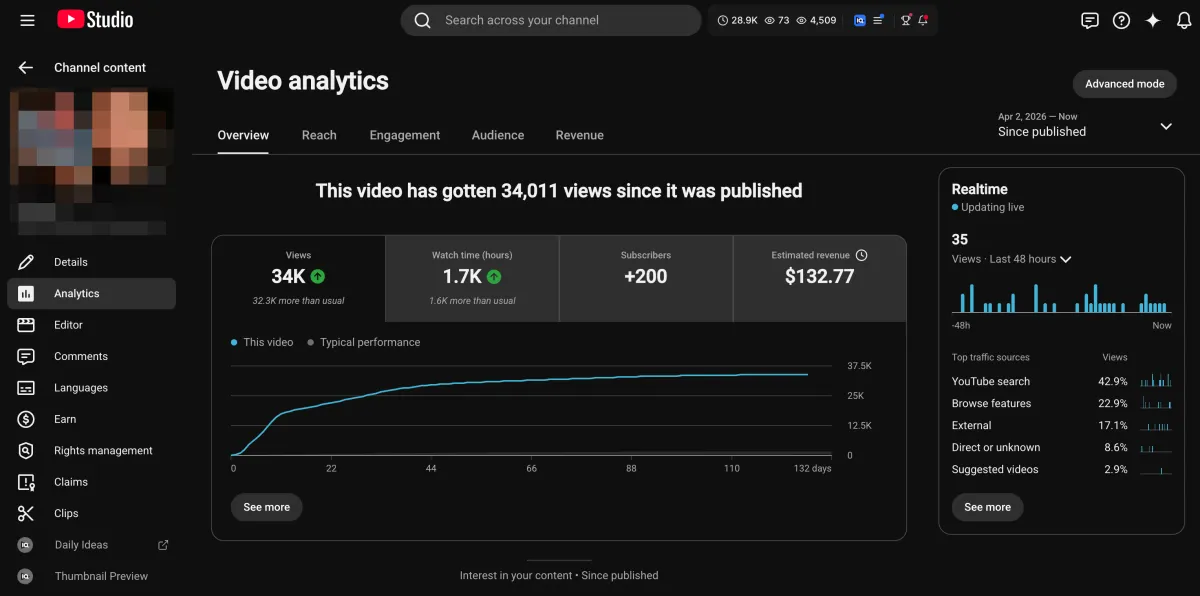
One specific video cost about $132.77 to make and pulled in over 34,000 views, eventually generating more than $1,000 a month in ongoing income. What made it different wasn't the production quality or the topic, it was that the traffic source had quietly shifted from being recommended to being searched for. People were typing the exact problem into a search bar and finding it themselves, months after I'd stopped thinking about the video at all. That was the first time the mechanism behind genuinely passive income became something I could point to and repeat on purpose, rather than something that happened by accident.
What Actually Took One Channel To Six Figures A Year
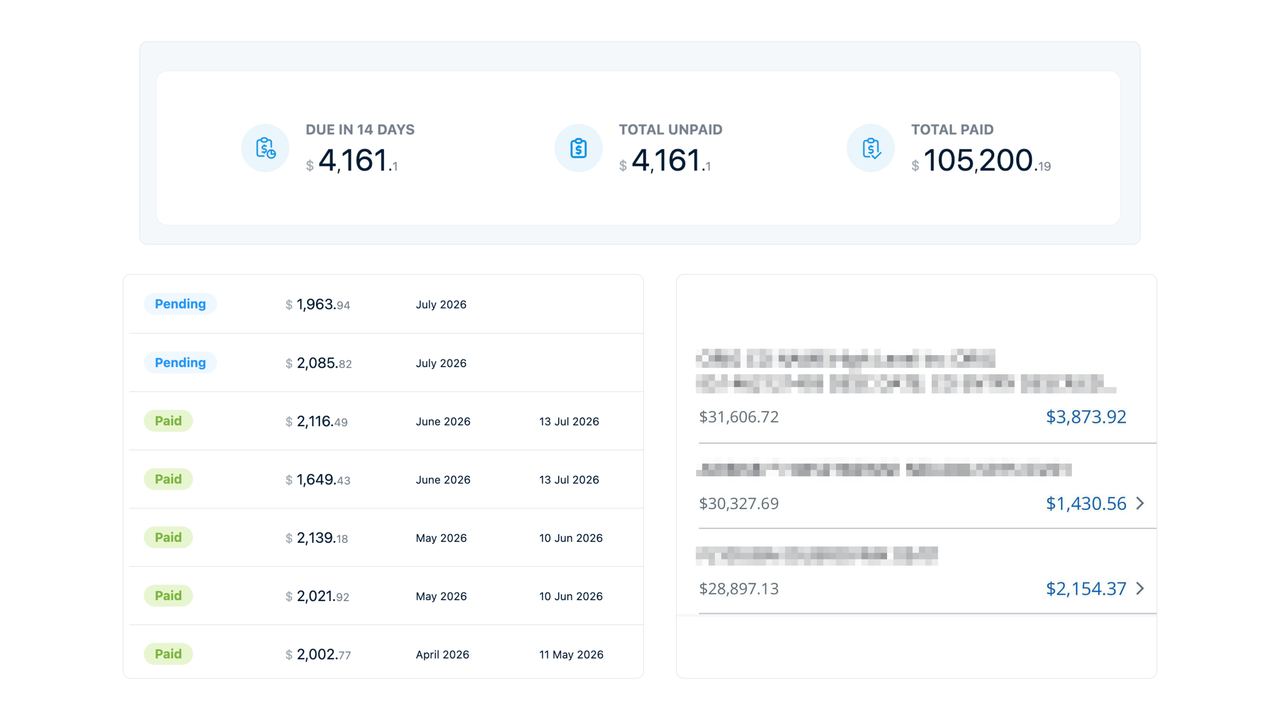
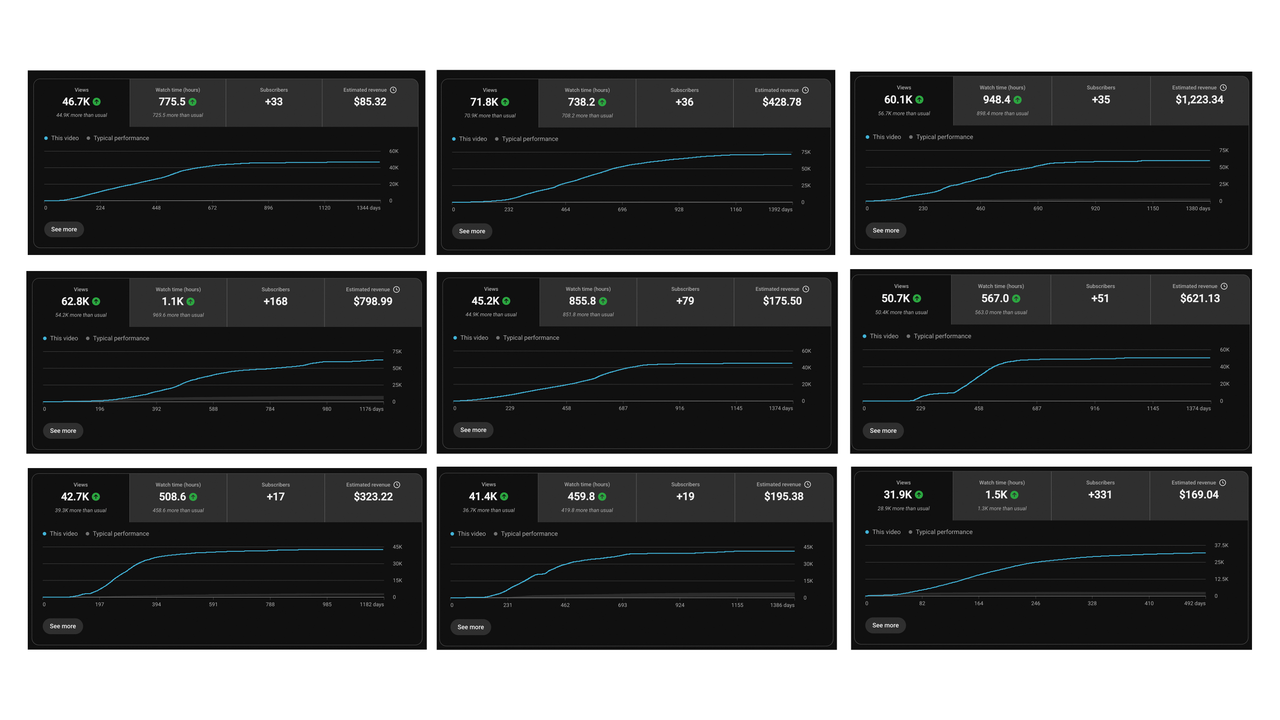
The channel that eventually reached roughly six figures annually didn't get there from one viral hit. It got there from a large library of specific, evergreen videos, each pulling a modest, individually unremarkable amount of traffic, stacked together into something substantial. Income came from three sources at once, ad revenue, affiliate commissions, and brand deals, not any single one carrying the whole channel. I've had real offers to buy that channel outright, in the range of $100,000, and turned them down because I believed, and still believe, it was worth more continuing to compound than selling outright at that point.
The Actual Mechanics Behind "Passive" Here
Every video in that library functions as an independent, standalone deposit rather than a single bet you make once and hope pays off. A library of dozens of these, each individually capable of being found through search without any ongoing promotion, is the actual asset. This is the same principle behind treating each video as a deposit rather than a lottery ticket, and it's the mechanical reason the income eventually stops requiring daily attention, each piece was built to stand on its own from the start.
What This Actually Required Early On
Real, unglamorous research discipline, the willingness to check whether a topic had genuine search demand rather than just seeming interesting. Consistency through a long stretch where almost nothing measurable was happening. And, honestly, more patience with blind, untracked publishing than I'd recommend to anyone starting today, tracking from the beginning would have compressed years of guessing into a fraction of that time.
What I'd Do Differently Starting Today
Start tracking from the very first video, not two thousand videos in. Decide what each video is pointing toward, ad revenue, an affiliate link, a product, before scripting it, rather than figuring out monetization after the fact. And treat the first three months of near-silence as expected, not as a sign the approach isn't working, since that's consistently the stretch where people quit right before a correctly built channel starts showing its first real signal.
Is This Actually Realistic For You?
Be honest with yourself about the real odds before treating this as a plan. Only a small share of YouTube channels ever reach monetization eligibility at all, and among those that do, a large portion earn a modest amount, not six figures. Reaching something like $100,000 a year sits at the upper end of what's achievable, built over years, not months, and it requires the specific, evergreen approach described here rather than chasing whatever's trending. I've laid out the honest, complete numbers behind this, including a realistic month-by-month profit timeline, in is a faceless YouTube channel actually profitable, I checked the real numbers.
Frequently Asked Questions
How long does it actually take to earn passive income from YouTube?
Based on this experience, meaningful passive income took years to develop, with the first real signal appearing around four years in, though a well-tracked, focused approach from day one can likely compress that timeline significantly.
Is $100,000 a year from YouTube realistic for most people?
No, it represents the upper end of outcomes, not a typical or median result. Most channels that reach monetization at all earn considerably less, and getting to six figures requires years of consistent, evergreen-focused publishing.
What does "passive" actually mean in this context?
It means a video keeps earning without requiring new, ongoing work once it's published, not that the income arrived without real work in the first place. The effort front-loads into research and structure; the income becomes passive afterward.
What's the biggest mistake to avoid if trying to replicate this?
Publishing without tracking anything, which is the single biggest inefficiency in the story above. Knowing which specific videos are converting from the very beginning avoids years of unnecessary guessing.
The Actual Takeaway
If there's one thing worth taking from this, it's that passive income on YouTube is real, and it's also slower and less glamorous to build than the phrase suggests. It comes from a library of specific, evergreen videos compounding over years, not a single lucky upload, and the work happens entirely up front. For the complete, practical breakdown of building that library the right way from the start, I've covered the full process in how to build an audience from zero on YouTube, and every realistic income stream worth stacking on top of ad revenue in faceless YouTube channel monetization, every way to actually get paid.
Learn how I turned a $132.77 video into $1000+ per month asset
Full case study on how you can replicate my success with YouTube SEO strategy.
Free downloadThe Zero Audience System
Build permanent YouTube income without a camera or an audience
The full methodology, 31 lessons plus bonuses. Limited spots.