Having zero audience isn't a dead end, and it usually isn't a mystery either. It almost always traces back to one of a handful of specific, diagnosable causes: the topic is too broad, the content isn't matching real search intent, viewers find it but don't stay, there's no tracking in place to know what's actually happening, or the channel simply hasn't published enough yet to have generated any real signal. Here's how to figure out which one applies to you, and what to actually do about it.
First, How Long Have You Actually Been At This
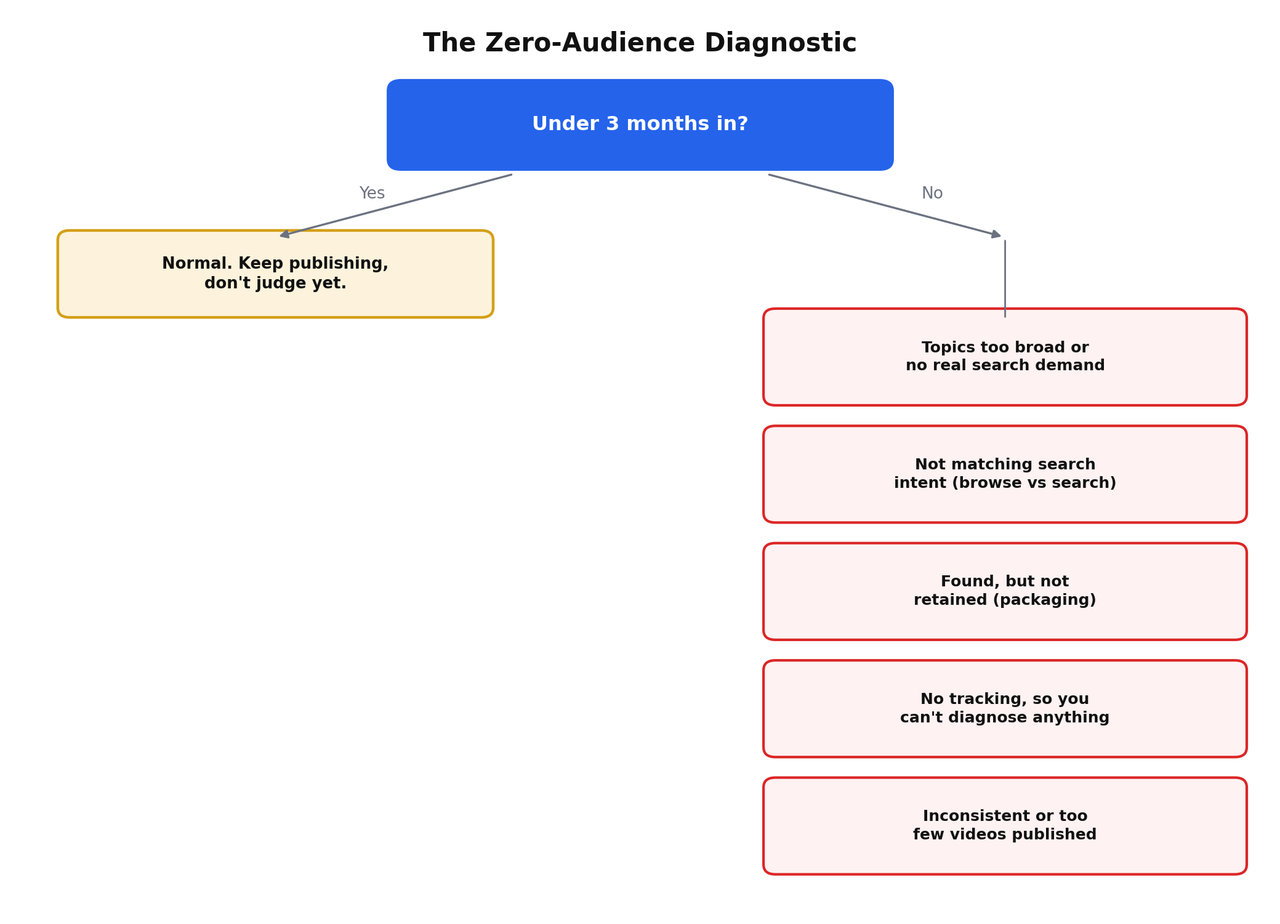
If you're under three months in, zero audience is normal, not a problem requiring a fix. YouTube's systems need real behavioral data before they can confidently recommend anything from a new channel, and that data simply doesn't exist yet in the first few months regardless of how good the content is. If this describes you, the right move is continuing to publish consistently, not diagnosing a problem that may not exist.
If you're past three months with genuinely nothing happening, that's when it's worth working through the diagnostic below.
Diagnosis One: Your Topics Are Too Broad, Or Don't Match Real Search Demand
A broad topic competes against every established channel already covering it, with more history and authority than a new channel has. Check whether your recent videos target a specific, well-defined problem or a generic, broad idea. "Cooking tips" is broad and won't find a searcher with a specific need. "How to keep rice from sticking to the pot" is specific enough to actually match a real search. If your titles read closer to the first example, this is likely your primary issue, and it's fixable by narrowing every future topic down to a specific, searchable problem rather than a general theme.
Diagnosis Two: You're Not Actually Being Found
Open YouTube Studio and check your traffic sources for recent videos. If search traffic is close to zero and most views come from your own channel page or external links, your content isn't being matched to search queries at all, regardless of quality. This often happens when a title and description describe a topic vaguely rather than matching the exact phrasing people actually search. Compare your titles against what shows up in YouTube's own autocomplete for your topic, if they don't resemble each other, that's a direct, fixable gap.
Diagnosis Three: You're Getting Found, But Not Retained
If search traffic exists but views are low relative to impressions, or retention drops sharply in the first thirty seconds, the problem isn't discovery, it's packaging and delivery. Check your click-through rate against your channel average, and check your audience retention graph for a steep early drop-off. A weak thumbnail, a slow opening, or a title that oversells what the video delivers all show up exactly this way.
Diagnosis Four: You're Not Tracking Anything, So You Can't Actually Diagnose The Problem
This is the most common root cause hiding underneath the other four. If you don't know your traffic sources, your click-through rate, or your retention pattern for recent videos, you can't tell which of the above actually applies to you, you're guessing. Before publishing anything else, open YouTube Studio's analytics for your last five videos and actually look at traffic source, CTR, and retention. This single habit turns "I have zero audience and no idea why" into a specific, addressable problem.
Diagnosis Five: You've Been Inconsistent, Or Simply Haven't Published Enough Yet
Five or six videos, however well made, isn't enough data for YouTube's systems or for you to draw real conclusions from. If your upload history is sparse or irregular, the honest diagnosis may simply be volume, ten to fifteen consistent, specific videos gives both you and YouTube's systems something real to evaluate, and getting there matters more right now than perfecting any single video.
What Not To Do When You're At Zero
Don't buy subscribers or views, it doesn't create real engagement and can actively damage how your channel is evaluated. Don't mass-upload low-effort, templated content hoping volume alone fixes things, that pattern risks real policy issues on top of not solving the underlying cause. Don't switch niches every two weeks out of frustration, each switch resets whatever limited signal you'd started building. And don't quit in month two specifically, that's consistently the point where channels built correctly are closest to their first real signal, right before it would have shown up.
A Practical Reset Plan For The Next 30 Days
- Pull traffic source, CTR, and retention data for your last five videos before changing anything else.
- Based on what that data shows, identify which single diagnosis above actually applies to you, not all five at once.
- Fix that one specific thing for your next three videos, narrower topics, better title-search matching, stronger thumbnails, or simply more consistent publishing.
- Keep publishing on a schedule you can actually sustain, rather than pausing to overthink each individual video.
- Re-check the same data after those three videos and confirm whether the specific metric you targeted actually improved.
For the deeper mechanics behind building a channel this way from the very beginning, including a full 90-day plan, I've covered that completely in how to build an audience from zero on YouTube. And if you want the full picture of exactly what determines whether YouTube finds and recommends a video in the first place, that's covered in what actually determines YouTube ranking factors.
Frequently Asked Questions
Is it normal to have zero audience after a few months on YouTube?
Yes, particularly in the first two to three months, since YouTube's systems need real behavioral data before confidently recommending a new channel's content. This becomes worth investigating specifically once you're well past that window with no movement.
Should I delete old videos that got no views?
Generally no, unless they're actively misleading or violate a specific policy. A quiet older video costs nothing to leave up and occasionally starts gaining traction later once related content on your channel builds context around it.
Does posting more often fix a zero-audience channel?
Only if insufficient volume is the actual cause. Posting more frequently without addressing a topic-selection or packaging problem just produces more videos with the same underlying issue.
How do I know if my niche itself is the problem?
Check whether real search volume exists for the specific topics you're covering, and whether the current top-ranking videos for those terms are weak or outdated. If demand is genuinely thin regardless of execution, that's a niche problem, not an execution one.
The Actual Next Step
Don't treat "zero audience" as one big, vague problem, treat it as five possible specific causes and go find out which one actually applies to you using your own real data. That diagnostic work takes less than an hour and replaces months of guessing with a clear, fixable next action.
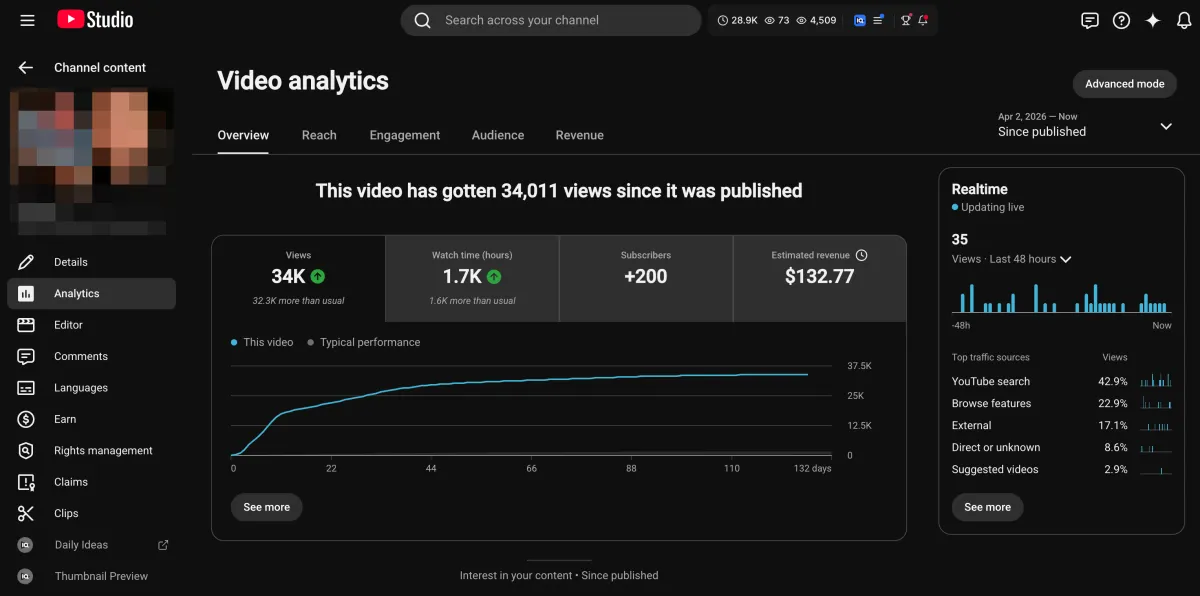
Learn how I turned a $132.77 video into $1000+ per month asset
Full case study on how you can replicate my success with YouTube SEO strategy.
Free downloadThe Zero Audience System
Build permanent YouTube income without a camera or an audience
The full methodology, 31 lessons plus bonuses. Limited spots.