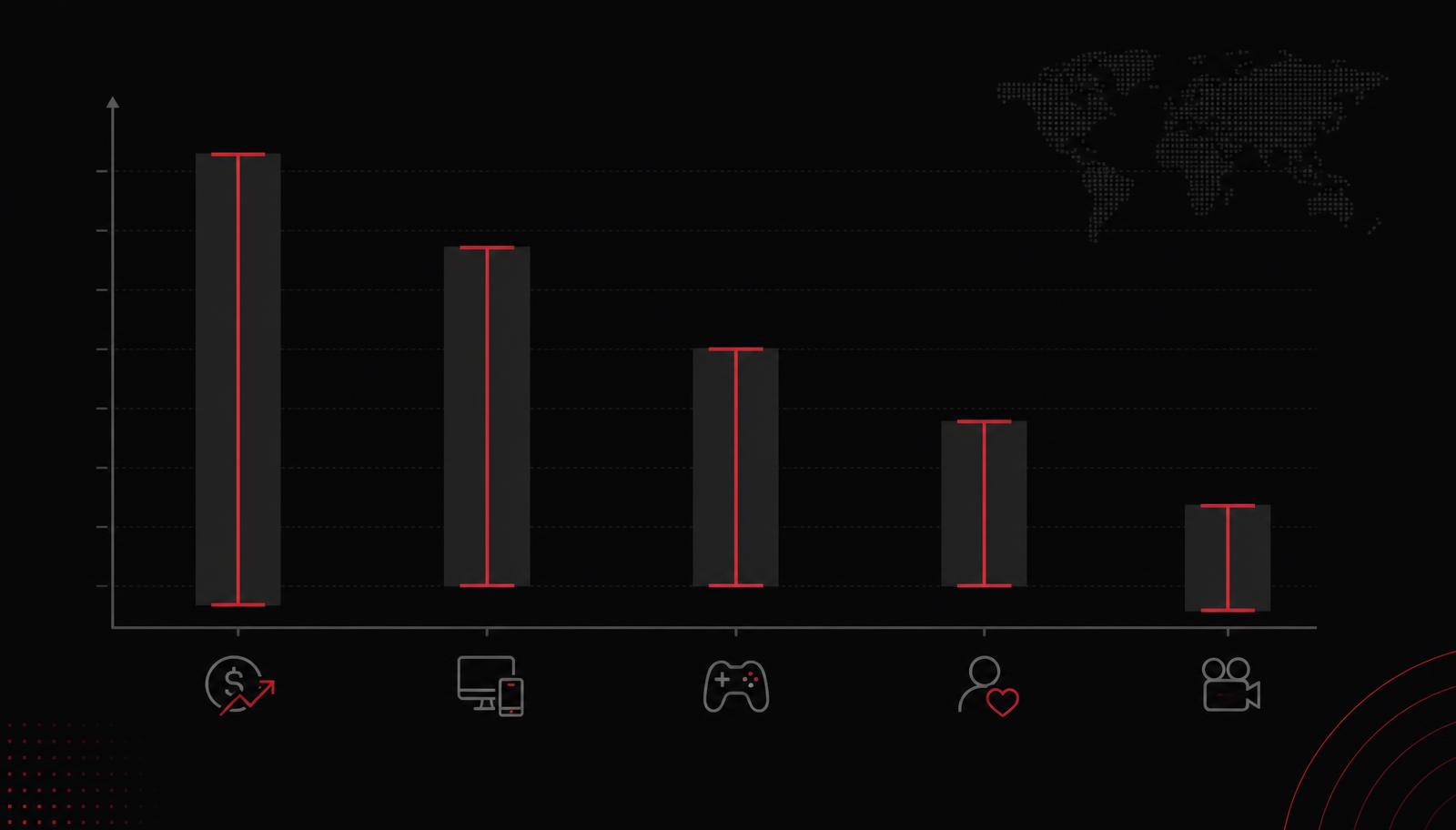
There is a number inside every monetized YouTube channel that tells the truth better than views do. It is not subscriber count. It is not watch time. It is RPM, revenue per mille, the amount of money a channel earns for every one thousand monetized playbacks.
If you have ever compared two channels with similar view counts and wildly different incomes, RPM is almost always the reason. A channel in one niche can make five or ten times more than a channel in another niche with the same traffic because the advertisers behind those views pay differently.
This post is a niche by niche breakdown of YouTube RPM. I am using numbers I have seen shared publicly by creators, screenshots from communities I am in, and data from tools like Social Blade and TubeBuddy. It is not exact science, but it is far more useful than guessing.
If you want the broader picture of how much faceless channels actually make, including costs and timelines, read my full breakdown of faceless YouTube earnings. If you want to know what a single view pays, this pay per view guide walks through it.
CPM vs RPM: the difference matters
Before the table, you need to understand two numbers YouTube shows you.
CPM is what advertisers pay per one thousand impressions. It is the gross number before YouTube takes its cut. RPM is what actually lands in your account after YouTube keeps 45 percent.
So if a niche has a $20 CPM, the creator RPM is usually somewhere around $11. If the CPM is $8, the RPM is closer to $4.40. That 45 percent cut is standard across the partner program.
RPM also includes all revenue sources, not just ads. YouTube Premium watch time, channel memberships, and Super Thanks all lift it slightly. For most channels, ads still dominate.
The reason this distinction matters is that people love to quote CPM because it sounds bigger. A headline saying a niche pays $50 CPM sounds exciting. The RPM reality is closer to $27.50. Still excellent, but not the same number.
YouTube RPM by niche: the ranges that show up in real channels
These ranges are for English language content viewed primarily from tier one countries like the United States, Canada, the United Kingdom, and Australia. RPM drops significantly when most of your audience is in countries where advertisers spend less.
| Niche | Typical RPM Range | Why It Pays That Way |
|---|---|---|
| Personal finance / investing | $18 to $35 | Advertisers are banks, brokers, and fintech apps. One qualified lead is worth hundreds. |
| Software / SaaS tutorials | $15 to $30 | B2B tools pay heavily for decision makers watching tutorials. |
| Business / entrepreneurship | $12 to $25 | Courses, agencies, and tools compete for the same viewer. |
| Real estate | $10 to $22 | Mortgage brokers and agents pay a premium for local intent. |
| Health / mental wellness | $8 to $18 | Insurance, therapy platforms, and supplement brands bid aggressively. |
| Education / skills | $6 to $14 | Steady demand, but the buyer intent is spread across many topics. |
| Technology reviews | $6 to $13 | Competitive, but consumer electronics brands have decent budgets. |
| Travel | $4 to $10 | High CPM in luxury travel, low in budget or general travel. |
| Gaming | $2 to $7 | Massive audience, but advertisers pay less per viewer on average. |
| Entertainment / reactions | $2 to $6 | Broad reach, weak buyer intent, lots of competition. |
| Cooking / food | $3 to $8 | Grocery and appliance brands advertise, but margins are thin. |
| Fitness / sports | $3 to $8 | Supplements and apparel advertise, but audience is price sensitive. |
| Vlogging / lifestyle | $2 to $6 | Hard to match ads to intent, so RPM stays low. |
| Music / ambient | $1 to $4 | Very low advertiser intent, lots of repeat background listening. |
| Kids / family | $1 to $5 | Safety rules and limited ad inventory keep RPM down. |
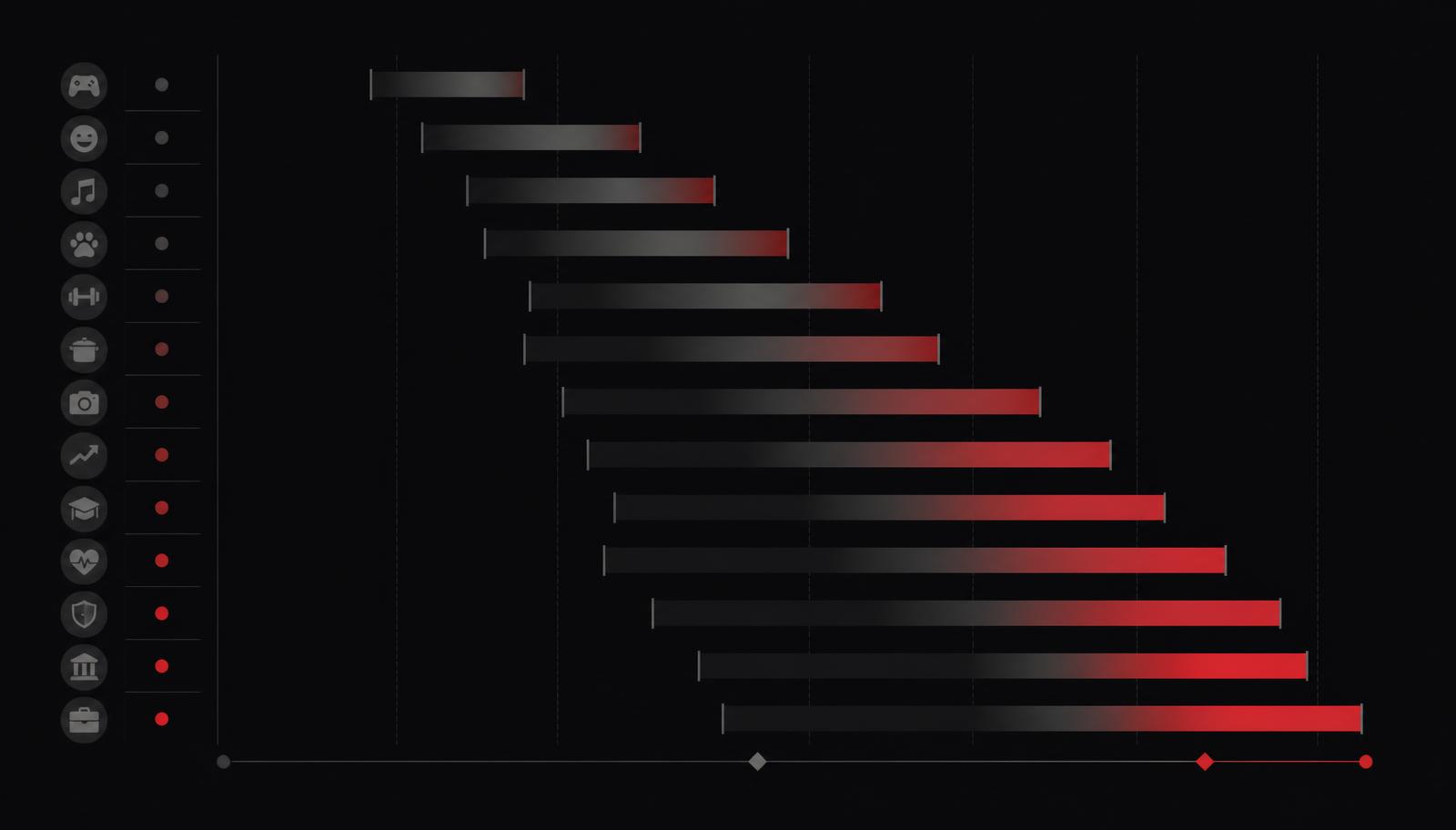
These are ranges, not guarantees. Two channels in the same niche can sit at opposite ends of the range depending on audience location, video length, ad placement, and how well the content matches advertiser demand.
The niches that pay the most have one thing in common
Look at the top of that table. Personal finance, software, business, real estate. What do they share?
The viewer is about to make an expensive decision. A bank wants someone about to refinance a mortgage. A broker wants someone opening an account. A SaaS company wants someone choosing a tool. Advertisers in these spaces will pay $20, $40, or even $100 CPM because a single conversion pays for thousands of impressions that did not convert.
This is why a faceless channel in a high intent niche can outperform a personality channel in a low intent niche with fewer views. The advertiser is not paying for entertainment. The advertiser is paying for access to a person who is actively trying to solve a problem that costs money.
Geography changes everything
A channel in the personal finance niche with 70 percent of its views from the United States will earn a very different RPM from the same channel with 70 percent of views from India or Brazil. This is not a value judgment about audiences. It is simple advertiser economics.
Advertisers in the United States pay more because the average transaction value is higher. The same mortgage broker in the US can earn thousands from one closed deal. In a market with lower transaction values, the broker cannot afford the same bid.
If you are choosing a niche, do not just look at the category. Look at where your likely audience lives. A channel aimed at US homeowners will almost always out earn a channel aimed at a global audience in the same broad topic.
The niches that look good but are not
Some niches have high CPM on paper but are miserable to build in. Here are the traps.
Insurance. Health and life insurance can show CPM numbers above $30, but the content is heavily regulated, hard to make visually interesting, and YouTube demonetizes or limits ads on many health related videos.
Crypto. Advertiser spend here swings violently with market cycles. A channel can see $25 RPM one quarter and $4 the next. It also attracts scam advertisers, which YouTube limits aggressively.
Medical / mental health. High advertiser interest, but also high risk of demonetization, age restriction, and misinformation flags. If you are not qualified to speak on the topic, it is not worth the RPM.
Make money / business opportunity. This space pays well when it is specific, like software reviews or freelancing skills. It pays poorly when it is generic motivation content because advertisers cannot match intent.
Why longer videos usually earn higher RPM
A ten minute video can run multiple ad breaks. A two minute video usually runs one pre roll ad. That alone changes the math.
Longer videos also tend to attract higher intent viewers. Someone watching a twenty minute tutorial on how to set up a CRM is closer to buying something than someone watching a thirty second clip. The algorithm knows this. Advertisers know this.
This is one reason the Zero Audience System focuses on evergreen, long form content. Short form has its place, but if your goal is a monthly income asset, the RPM economics of long form are hard to beat.
How to use this table
Do not pick the highest RPM niche and force yourself into it. A personal finance channel you hate making will fail before it ever monetizes. The better move is to find the overlap between three things.
- A niche you can consistently research and script.
- A niche with RPM high enough to make the math work.
- A niche where you can make content that is better than what currently ranks.
If you can get all three, you have a real shot. If you only have one, you are gambling.
For a deeper look at how to find those niches, my list of 200 YouTube automation niches for 2026 breaks down categories by competition and entry difficulty.
RPM is not fixed
The biggest mistake people make is treating RPM like a property of the niche. It is not. It is a property of your specific audience, your content format, your upload consistency, and your ability to keep viewers watching.
A software tutorial channel with short, shallow videos might sit at $6 RPM. The same channel with in depth tutorials, better retention, and an audience of US based professionals might hit $18 RPM. The niche did not change. The execution did.
This is good news. It means you are not locked into a low number forever. It also means there is no shortcut. The number goes up when the content gets better.
Frequently Asked Questions
What is a good RPM for a new YouTube channel?
A new monetized channel usually sees $2 to $6 RPM if it is in a broad niche. If it is in a high intent niche with a US audience, $8 to $12 is realistic within the first year. Anything above $15 usually means you have found strong intent or a very specific audience.
Does faceless content get lower RPM?
Not because it is faceless. RPM depends on niche, audience location, and advertiser demand. A faceless finance channel can earn more than a vlog in a low intent niche. The format itself does not penalize you.
Why did my RPM drop suddenly?
Common causes include a viral video bringing in a low paying country, a change in ad rates for your niche, a drop in CPM during January after the holiday season, or YouTube limiting ads on specific videos. Check your analytics by video and by country before panicking.
Is CPM or RPM more important?
RPM is what you actually get paid. CPM is useful for understanding advertiser demand, but your bank account only cares about RPM.
Can you increase RPM without changing niche?
Yes. Longer videos with multiple ad breaks, better audience retention, more US traffic, and content that matches expensive buyer intent will all push RPM up. The niche sets the ceiling. Your execution determines how close you get to it.
The Bottom Line
YouTube RPM by niche is one of the most useful planning numbers you can look at before you start a channel. It tells you whether the view count you are targeting will actually produce the income you want.
A channel with 500,000 monthly views at $4 RPM makes $2,000 per month. A channel with 150,000 monthly views at $20 RPM makes $3,000 per month. The smaller channel wins because it picked the right niche.
The goal is not to chase the highest possible number. The goal is to find a niche where your content can rank, your audience has buyer intent, and the RPM makes the work worth it.
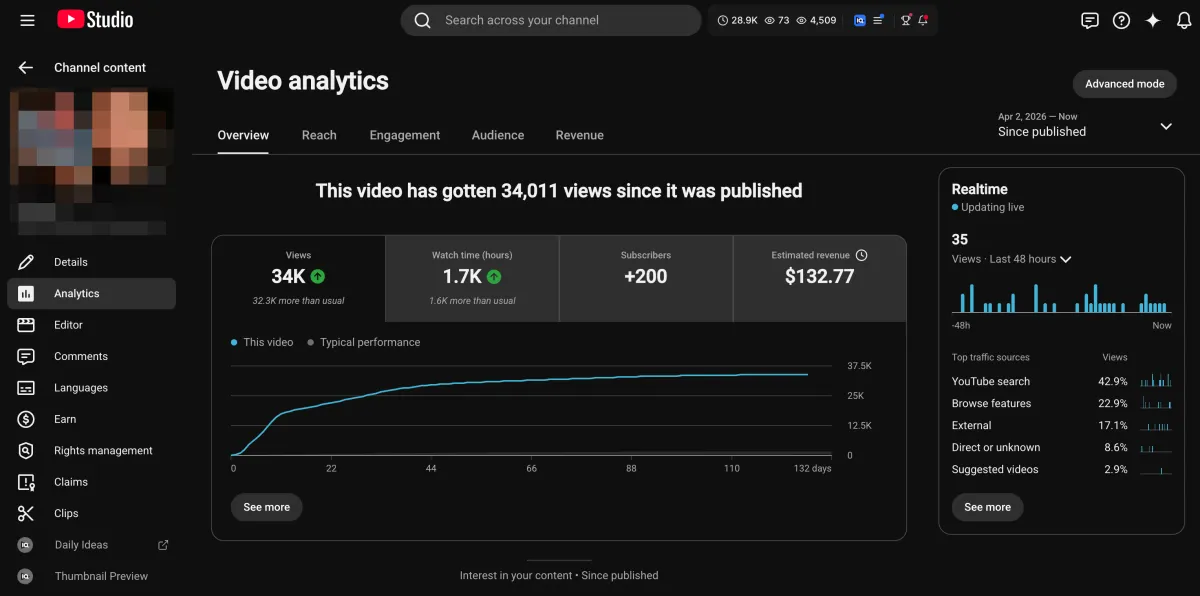
Learn how I turned a $132.77 video into $1000+ per month asset
Full case study on how you can replicate my success with YouTube SEO strategy.
Free downloadThe Zero Audience System
Build permanent YouTube income without a camera or an audience
The full methodology, 31 lessons plus bonuses. Limited spots.