Every answer to this question online is either a made up flat number or a range so wide it is useless. "YouTube pays $0.01 per view." "YouTube pays $18 per thousand." Both of those are real numbers from real channels, and they are two hundred times apart, which tells you the average is not the interesting part.
So let me do this properly. Where the money actually comes from, what the split is, what the real ranges look like by topic, and how to work out the number for your own channel instead of somebody else's.
The Number Nobody States Clearly
YouTube does not pay per view. It pays a share of the ad revenue earned on monetised playbacks. Two different things, and the gap between them is where every misleading figure comes from.
The chain looks like this. An advertiser pays for an impression. YouTube takes its cut. You get 55 percent of the ad revenue on long form, and roughly 45 percent of the Shorts pool after music licensing comes out. That split is published in YouTube's own revenue share documentation.
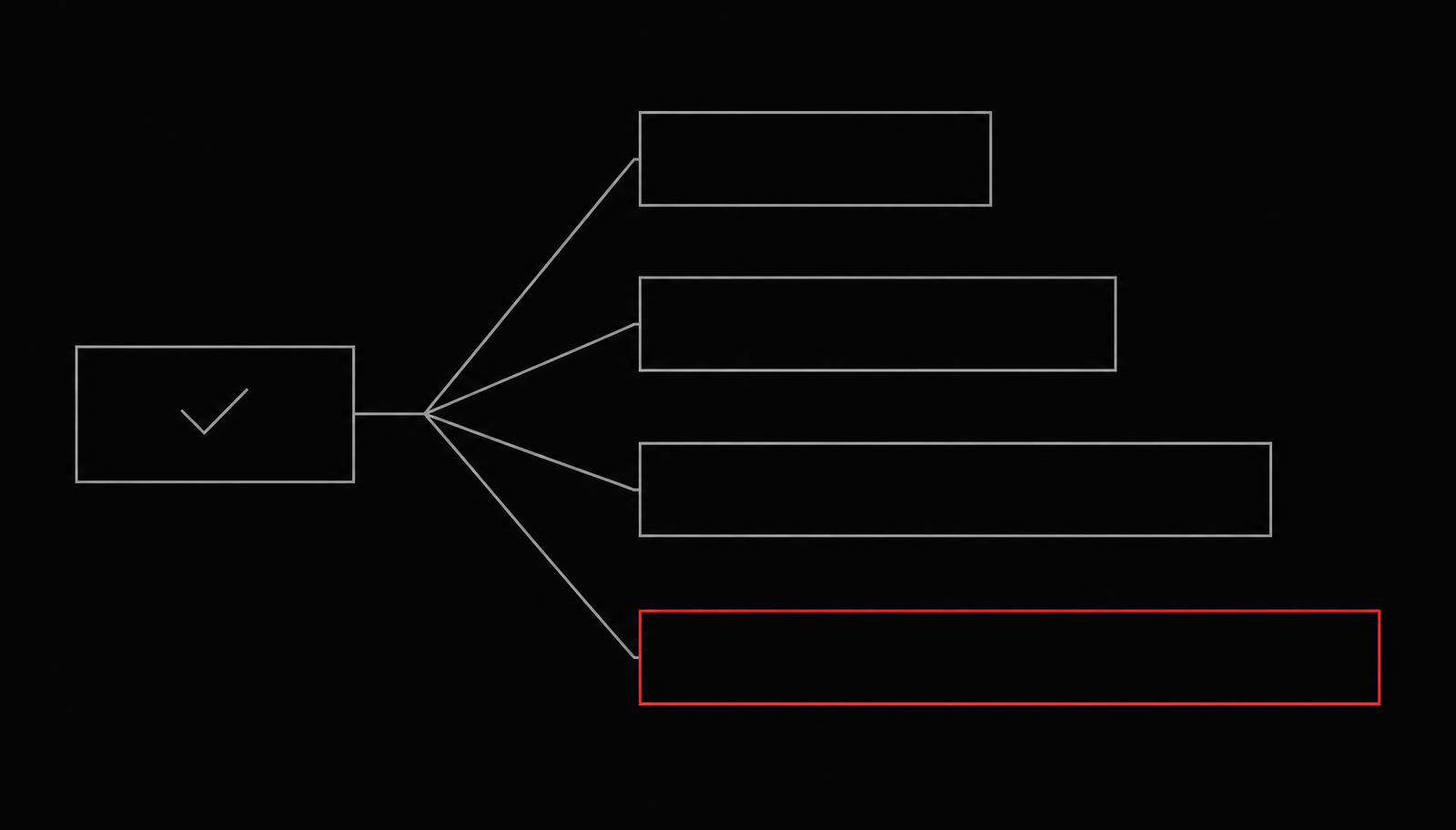
Then the important part. Not every view carries an ad. Depending on the channel, somewhere between 40 and 70 percent of views are monetised at all. The rest are skipped, ad blocked, Premium, or simply not filled. So your effective per view rate is always well below the headline CPM.
CPM Versus RPM, Because This Is Where People Get Fooled
Two acronyms, and screenshots online almost always show the flattering one.
CPM is what advertisers pay per thousand ad impressions, before your split, counted only on monetised playbacks. A $30 CPM sounds enormous.
RPM is what you actually receive per thousand total views on the video, after the split and after unmonetised views dilute it. That same video might have an RPM of $9.
A useful rule from watching hundreds of channels. RPM lands somewhere around a quarter to a third of CPM. When somebody posts a $45 CPM screenshot, they are earning roughly $12 to $15 per thousand views, which is still excellent, just not what the image implies.
Per single view, in dollars, that is:
- A weak channel: $0.0005 to $0.002 per view.
- A typical mixed audience channel: $0.002 to $0.006 per view.
- A strong commercial niche: $0.008 to $0.025 per view.
- An outlier finance or software channel: $0.03 to $0.06 per view.
That is the honest spread. One to two tenths of a cent at the bottom, five cents at the top. Same platform, same effort per video.
What Decides Where You Land
Four inputs, roughly in order of how much they move the number.
Topic. This dominates. Advertisers bidding on personal finance, business software, insurance, and legal topics pay many multiples of what advertisers bidding on gaming or general entertainment pay, because the customer behind the view is worth more. Nothing else you can change matters this much.
Audience location. The same video, same topic, pays roughly three to five times more from a United States, United Kingdom, Canada, or Australia audience than from lower CPM regions. Check the geography tab in Studio before you set any expectation.
Format and length. Long form videos over about eight minutes can carry mid roll ads, which is the single biggest structural lever you control. A ten minute video with two well placed mid rolls can earn double a seven minute version of the same content. Shorts, by contrast, sit at a fraction of long form per view.
Season. Q4 CPMs run 40 to 70 percent above January. If you compare your December RPM to your February RPM and conclude the channel is dying, you are misreading the calendar.
Realistic RPM Ranges By Niche
These are the bands I actually see, for long form, mixed but Western leaning audiences. Treat them as brackets, not promises.
- Personal finance, investing, credit: $12 to $40
- Business, marketing, software: $10 to $30
- Insurance, legal, real estate: $12 to $35
- Technology reviews and buying guides: $6 to $16
- Health and fitness: $5 to $12
- Home improvement and tools: $6 to $14
- Automotive: $4 to $10
- Education and how to: $4 to $12
- Travel: $3 to $8
- Cooking and food: $3 to $8
- True crime and documentary: $3 to $9
- Gaming: $1.50 to $5
- General entertainment and compilations: $1 to $4
- Kids content: $0.50 to $2, and heavily restricted
- Shorts, any niche: $0.04 to $0.25
Two things jump out of that list. The gap between the top and the bottom is around thirty times. And the Shorts line is not a typo, it is two orders of magnitude below long form. That single fact should shape how you spend your week, and it is why I treat Shorts as acquisition rather than income in the Shorts ranking article.
Worked Examples
Numbers are easier to argue with than ranges, so here are four channels that all get 200,000 monthly views.
Gaming compilations, global audience. RPM $2. That is $400 a month. At forty videos a month, $10 a video.
Cooking channel, mixed audience, ten minute videos with mid rolls. RPM $6. That is $1,200 a month from eight videos.
Personal finance explainers, mostly United States, twelve minute videos. RPM $22. That is $4,400 a month from six videos.
Shorts channel doing the same 200,000 views. RPM $0.10. That is $20 a month.
Same view count. Twenty dollars to four and a half thousand. The topic decision you made before you filmed anything explains almost all of it. If you want to see which specific niches sit in the upper bands with thin competition, I listed two hundred of them in the niche breakdown, and the full earnings math sits in how much faceless channels make.
Ad Revenue Is The Smallest Number On The Page
This is the part that reframes everything. On every channel I have run or advised past a certain point, ad revenue ends up being the minority of income.
A rough composition for a mature channel doing $10,000 a month:
- Ad revenue: $2,000 to $3,500
- Sponsorships: $3,000 to $5,000
- Own product or service: $2,000 to $6,000
- Affiliate style commissions on tools mentioned: $500 to $2,000
Sponsorship pricing does not track RPM. It tracks how valuable your specific audience is to one specific advertiser, which is why a 15,000 view video in a narrow B2B niche can command more than a 400,000 view entertainment video. You can sanity check your own rate with the sponsorship calculator.
Per view revenue is a measurement of your topic choice, not your effort.
How To Work Out Your Own Number
Do this instead of trusting any article, including this one.
- Open YouTube Studio, Analytics, Revenue tab.
- Set the range to the last 28 days. Not 7, too noisy. Not 365, too seasonal.
- Read RPM, not CPM. Write it down.
- Divide by 1,000. That is your real per view rate today.
- Check the geography breakdown. If under half your views come from high CPM regions, that is your biggest available lever.
- Check your monetised playback percentage. Under 50 percent usually means either a lot of Shorts in the mix or a young audience.
- Repeat monthly and only compare the same month year over year.
Before monetisation, you can estimate. Take the mid point of your niche band above, multiply by expected monthly views divided by a thousand, then cut the result by a third. Being pleasantly surprised is better than building a plan on a best case.
Common Misconceptions
"YouTube pays $1 per thousand views." This was roughly true in 2014 for a general audience. It is now the low end of gaming and nowhere near a commercial niche.
"More subscribers means more per view." Subscriber count has no effect on RPM. It affects how quickly a new video gets its first views, nothing else.
"Longer videos always pay more." Longer videos can carry more ads, which helps, but only if the retention holds. A padded eighteen minute video that loses everybody at four minutes earns less than a tight nine minute one.
"Buying views works." It kills your RPM, because bot views are unmonetised and they wreck the retention signal the platform uses to decide whether to show your video to anybody real. Related: what actually helps a new channel is covered in how to warm up a YouTube channel.
"RPM should be stable." It never is. Advertiser demand shifts weekly. A 30 percent month over month swing with no change on your side is completely normal.
Frequently Asked
How much for 1,000 views? Between about $0.50 and $40 depending almost entirely on topic and audience location. The middle of the whole platform sits around $3 to $6.
How much for 1 million views? $1,000 to $5,000 for general content. $12,000 to $30,000 in a strong commercial niche. Under $250 if those million views were Shorts.
When do payments actually arrive? Monthly, around the 21st, for the previous month, once you clear the $100 threshold. YouTube documents the schedule in its payment timing help pages.
Do rewatches count? Repeat views count as views and can carry ads, but the platform filters obvious duplicate abuse. You cannot loop your way to revenue.
Is Premium watch time worth more? Often yes, per view. Premium revenue is distributed by watch time share, and for long form content it can be a meaningful slice of the total, sometimes ten percent or more.
What is a good RPM for a beginner? Anything above the low end of your niche band. But the more useful question in month one is whether the videos are being found at all, which is what the SEO guide is for. Revenue per view is a problem you get to have later.
The Point
Per view pay is not a platform property, it is a consequence. Pick a topic where the audience is worth something to an advertiser, make videos long enough to carry mid rolls, build them around questions people will still be typing in two years, and the per view number sorts itself out. Pick entertainment for a global audience and no amount of optimisation will move you off half a cent.
That decision happens before you record anything, which is exactly why it is the first thing I deal with in [the Zero Audience System](/).
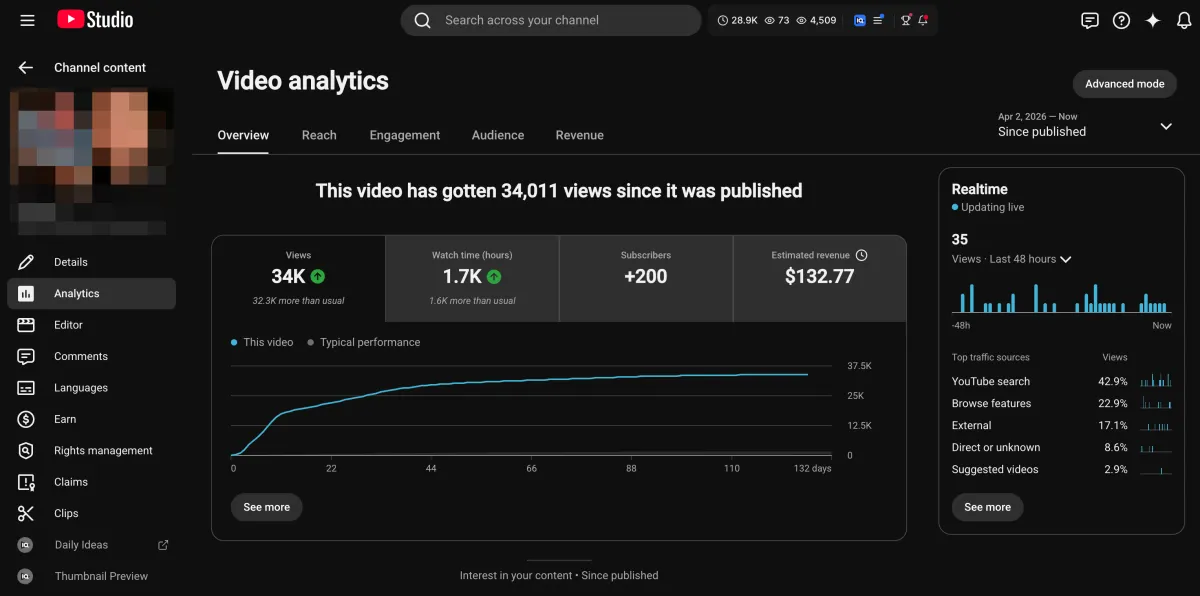
Learn how I turned a $132.77 video into $1000+ per month asset
Full case study on how you can replicate my success with YouTube SEO strategy.
Free downloadThe Zero Audience System
Build permanent YouTube income without a camera or an audience
The full methodology, 31 lessons plus bonuses. Limited spots.