Most YouTube SEO advice you find is a checklist written by somebody who has never had to make rent from a channel. Put the keyword in the title. Put it in the description. Add thirty tags. Rename the file before upload. None of that is wrong exactly, it is just so far down the list of what matters that following it feels like productivity while nothing happens.
I have built channels that live almost entirely on people typing something into the bar and finding my video years after it went up. That is the whole model I teach. So this is the full version. Not tips. The actual order of operations, what each part is worth, and what to ignore.
One promise up front. Everything here is what I would do if I started a channel tomorrow with zero subscribers and no way to force distribution.
What YouTube SEO Actually Is In 2026
YouTube is two products stuck together. One is a recommendation engine that pushes videos at people who were not looking for anything. The other is a query engine that answers people who typed something specific. Almost every creator plays the first game because it is louder. The second game is where beginners without an audience can win, because you are not competing for attention, you are answering a question that already exists.
The important shift in the last two years is that the query engine got wider. It is no longer only the YouTube bar. Your video can be the answer inside Google's video results, inside AI answer boxes that cite video sources, and inside YouTube's own suggested queries under a video. Google confirms video is surfaced across all of these in its video best practices documentation.
The practical result is that a video built for a real query has four or five doors into it, while a trend video has one door that closes in nine days.

The Priority Hierarchy
If you do nothing else, get the order right. This is roughly how much each layer decides your outcome.
- Topic demand. Around 50 percent. Whether anybody is actively looking for this at all.
- Competition fit. Around 20 percent. Whether you can realistically be one of the better answers for it today.
- Packaging. Around 20 percent. Title and thumbnail, which decide whether the click happens once you are visible.
- Satisfaction. Around 8 percent. Whether the video delivers what the click promised, measured through retention and session behaviour.
- Metadata. Around 2 percent. Description, tags, chapters, transcript, file name.
Almost everybody spends their time on the last two percent. I have never once seen tags save a video. I have seen a bad topic bury a brilliant one hundred times.
Step One. Demand Research That Is Not Guessing
You are looking for queries where three things are true at the same time. People search it, they search it every month rather than once during a news cycle, and the results currently ranking are beatable.
Here is the process I run, and it takes about forty minutes per topic cluster.
- Start with a seed. One broad thing your channel is about. "Solar panels", "Excel", "Toyota Hilux", "small business tax".
- Open YouTube in a private window and type the seed followed by a space. Write down every autocomplete suggestion. Then repeat with the seed followed by each letter of the alphabet. This is free and it is the most accurate demand list on the internet, because it comes from YouTube's own logs.
- Repeat that in Google. The queries differ, and the overlap between the two is where the strongest videos sit.
- Sort everything into three buckets. Questions, comparisons, and how to. Those three formats cover most durable demand.
- Kill anything seasonal or news driven. If it will not be searched in eighteen months, it is not an asset.
I cover the free tooling for this in detail in the free YouTube SEO tools I actually use, including the ones that give you real volume numbers without a subscription.
The trap here is volume worship. A query with two hundred searches a month that you can own for four years is worth more than a query with fifty thousand searches a month where you will never crack the top ten. Small and permanent beats big and impossible. That is the entire thesis behind the niche work in 200 YouTube automation niches to try in 2026.
Step Two. Reading The Competition Properly
Type your query into YouTube and look at the first eight results. You are answering five questions.
- How old are they? If the top results are from 2019 and 2021, the query is unclaimed. Recent, updated results mean somebody is defending it.
- Whose channels are they? Eight results from channels with a million subscribers is a wall. A mix of small channels means the query is decided by relevance, not authority.
- How many views? Consistent view counts across all eight means steady demand. One video with two million and the rest with three thousand means one video went viral and there is no real demand underneath.
- Do they actually answer it? Very often the top result is loosely related. That is the best signal you can find. A precise answer beats a popular near miss.
- How is it packaged? If every thumbnail is the same, a different one wins the click by default.
If four or more of those go your way, make the video. If not, move down your list. There is no shortage of queries and there is a very real shortage of your time.
I broke down what the platform actually weighs in what are the ranking factors for a YouTube channel.
Step Three. Packaging, Which Is Where Most Videos Die
Being visible and being clicked are two different problems. You can rank third and get nothing if the two videos above you are packaged better.

Rules I hold to on titles.
- Put the query near the front. Not stuffed, just first. "How to fix a leaking radiator valve" beats "I tried fixing my radiator and this happened".
- Keep it under about sixty characters so it does not truncate on mobile, where most of the traffic is.
- Add one specific detail that the other results do not have. A number, a year, a constraint, an outcome. "In 10 minutes, no plumber".
- Never write a title the video does not deliver. The click is worthless if the person leaves in twenty seconds.
Rules I hold to on thumbnails.
- Three elements maximum. It is going to be viewed at the size of a postage stamp.
- Readable at 20 percent size. Shrink it on your screen before you upload. If you cannot read it, nobody can.
- Different from the other results, not better than them. If everybody is using a face, use a diagram. If everybody is using a diagram, use a face.
- Text on the thumbnail should not repeat the title. It should add the second half of the thought.
A two percent lift in click through rate on a video that runs for five years is worth more than a whole month of extra uploads. Packaging is the highest leverage hour you will spend.
Step Four. The Video Itself
Ranking gets you shown once. Retention decides whether you keep being shown. The platform is watching whether people who clicked stayed, and whether they kept watching YouTube afterwards.
- Answer in the first thirty seconds. Do not save the answer for the end. People who get the answer immediately stay for the detail. People who feel stalled leave and take your ranking with them.
- No channel intro. No "before we get started". Every second of throat clearing is measured.
- Structure it as the query. If the query has four parts, deliver four parts in order. Predictable structure keeps people watching, it does not bore them.
- Aim for durability. Do not date yourself unnecessarily. "This year" ages badly. Naming the specific year in the title is fine when the topic genuinely changes annually, because you can re-upload or update it.
- Length follows the question. A three minute answer padded to twelve minutes retains worse than an honest three minutes. Long only wins when the question is genuinely long.
The videos I have that still earn from 2022 all share one trait. They answer the exact thing the title promised, quickly, and then keep going for the people who wanted more.
Step Five. Metadata, Done In Four Minutes
This is worth doing and not worth agonising over.
- Description. First two lines matter, they show in results. Write a real sentence describing what the video answers. Then a short summary, then links. Two hundred words is plenty.
- Chapters. Timestamps starting at 0:00 create clickable segments and sometimes surface as key moments in Google results. Free, useful, takes two minutes.
- Transcript. Upload or correct the auto captions if the topic has technical terms the machine will mangle. This is the one metadata item that genuinely helps.
- Tags. Five to eight. YouTube has publicly said they play a minimal role. Do not spend time here.
- Playlists. Put every video in a topic playlist as you publish. Playlists feed session watch time and give you internal linking between your own videos.
- End screens and cards. Point them at the next logical question, not at your most popular video. Sequence beats popularity.
Step Six. Channel Level Signals
Individual videos do not rank in isolation forever. A channel that has published fifteen videos on one subject starts to get shown for adjacent queries it did not directly target. This is the closest thing YouTube has to topical authority and it is the reason scattered channels stall.
Practical version. Pick one subject. Publish twenty videos inside it before you widen. If you must go wider, that is what a second channel is for, which I argued in when to start a second YouTube channel.
Off platform matters less than people claim, but it is not zero. Embeds on real pages and links to your videos do get counted, and they are also how Google finds and re-crawls a video. You can check what your competitors have picked up using the method in how to check YouTube video backlinks.
Step Seven. Measuring The Right Thing
Open YouTube Studio, go to Analytics, then Reach, then Traffic source types. The only number that tells you whether any of this is working is the share of views coming from YouTube search, plus external. If that number is climbing month over month, the library is compounding. If all your views are from Browse and Suggested, you are renting distribution, not owning it.
Second report to live in. Advanced mode, filter by traffic source YouTube search, then sort by video. That tells you which specific videos are pulling queries. Make more of those.
Third. Search terms report. This shows the actual queries bringing you views, including ones you never targeted. Every unexpected query in that list is a video you should make next week.
The Twelve Month Plan
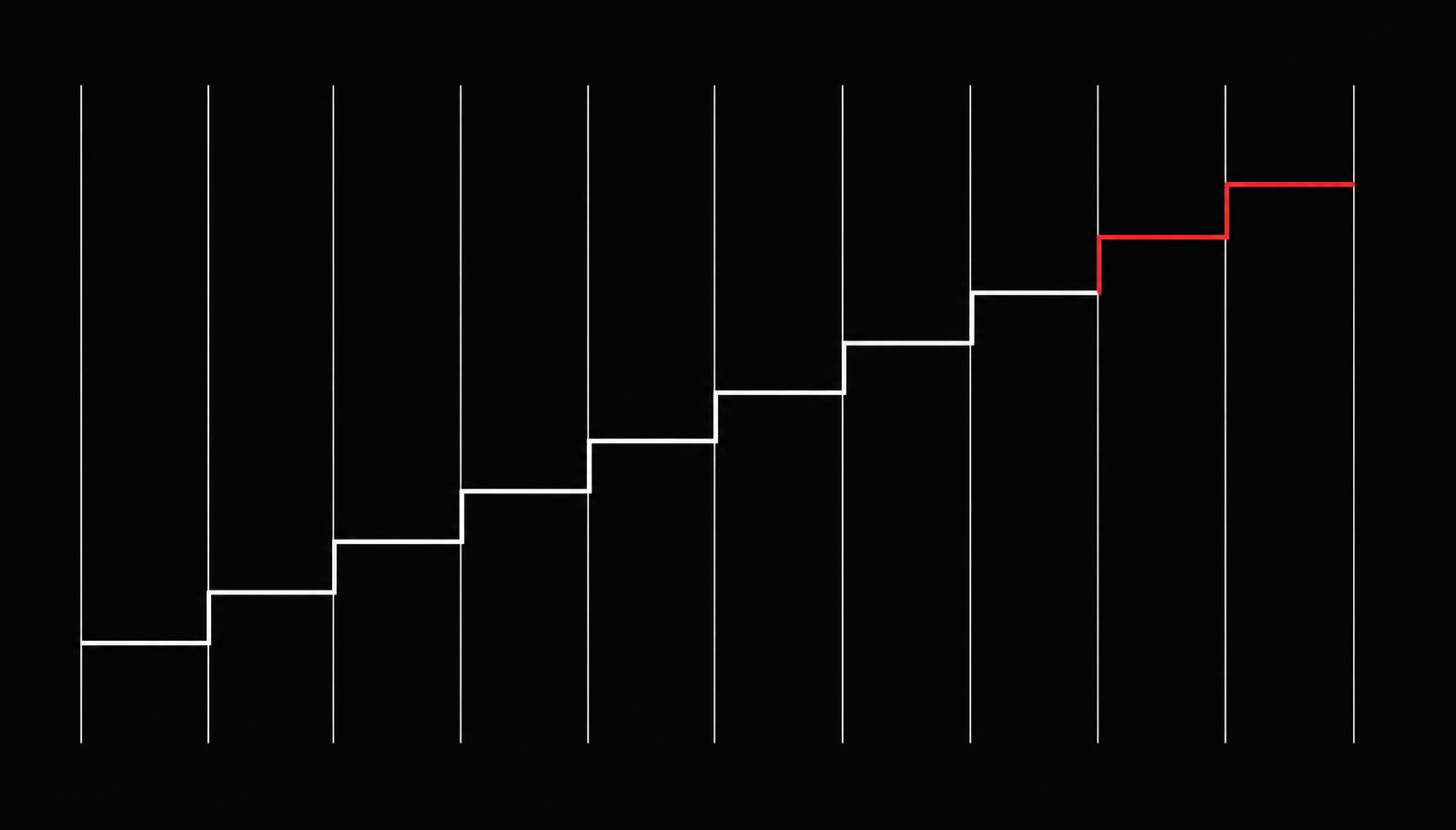
This is the pattern I have watched work on channel after channel, and the reason patience is not a personality trait here, it is a requirement.
- Months 1 to 2. Build a list of sixty validated queries. Publish eight to twelve videos. Expect almost nothing. You are gathering data, not results.
- Months 3 to 4. Your first two or three videos start pulling steady traffic. Study those specifically. Make five more videos that are close cousins of them.
- Months 5 to 7. Monetisation typically becomes reachable. Older videos are now getting more views per month than when they were published. That is the signal that the model is working.
- Months 8 to 11. The channel starts ranking for queries you never targeted, because the topic coverage is deep enough. Update your best three videos.
- Month 12 and beyond. New uploads rank faster because the channel has standing. The library carries the floor and every new video adds on top.
If you want the earnings side of that curve with real numbers, it is in how much do faceless YouTube channels make and when do you start earning money on YouTube.
A trend video pays you for nine days. A video that answers a permanent question pays you for years. Same production cost, completely different asset.
Myths Worth Dropping
- Upload frequency is a ranking factor. It is not. It is a volume factor. Ten good videos beat forty rushed ones, because bad retention on forty videos teaches the platform not to show you.
- You need to post at the perfect time. Irrelevant for query driven content. The video is being found weeks later.
- Tags are secret weapons. They are not, and the tools that sell you competitor tag scraping are selling you the least important two percent.
- Shorts help long form rank. They mostly bring a different audience with different intent. Shorts are a distribution tool with weak economics, worth the maths in the Shorts calculator.
- Subscribers drive rankings. Zero subscriber videos rank against big channels every day, which is the entire premise of the system I teach.
- You must rename your video file to the keyword. This has never been demonstrated to do anything.
A Short FAQ
How long until a video ranks? Anywhere from a week to four months. Low competition queries can settle within days. Competitive ones need the video to accumulate watch history first.
Should I update old videos? Yes, but not the file. Update the title, thumbnail, and description on any video sitting in positions four to ten. The gain from repackaging a video that already ranks is usually larger than a new upload.
Does the platform penalise re-uploads? No, but you lose the video's accumulated history, so only do it when the content is genuinely wrong.
Do I need a face or a voice? Neither. Every principle here works on a channel with no camera and a synthetic voice, provided the answer is good.
How many videos before I know if it works? Twenty, published inside one subject, over twelve to sixteen weeks. Fewer than that and you are reading noise.
What To Do This Week
Pick one subject. Build the query list using autocomplete. Filter it against the competition checks. Choose the eight easiest wins and publish them in order of easiest first. Then read your traffic source report every Monday and let it tell you what to make next.
That is the whole method. It is not complicated, it is just slow at the start and almost impossible to stop once it is running. If you want the structured version of the same process, with the demand filtering and packaging system laid out end to end, that is what [the Zero Audience System](/) is.
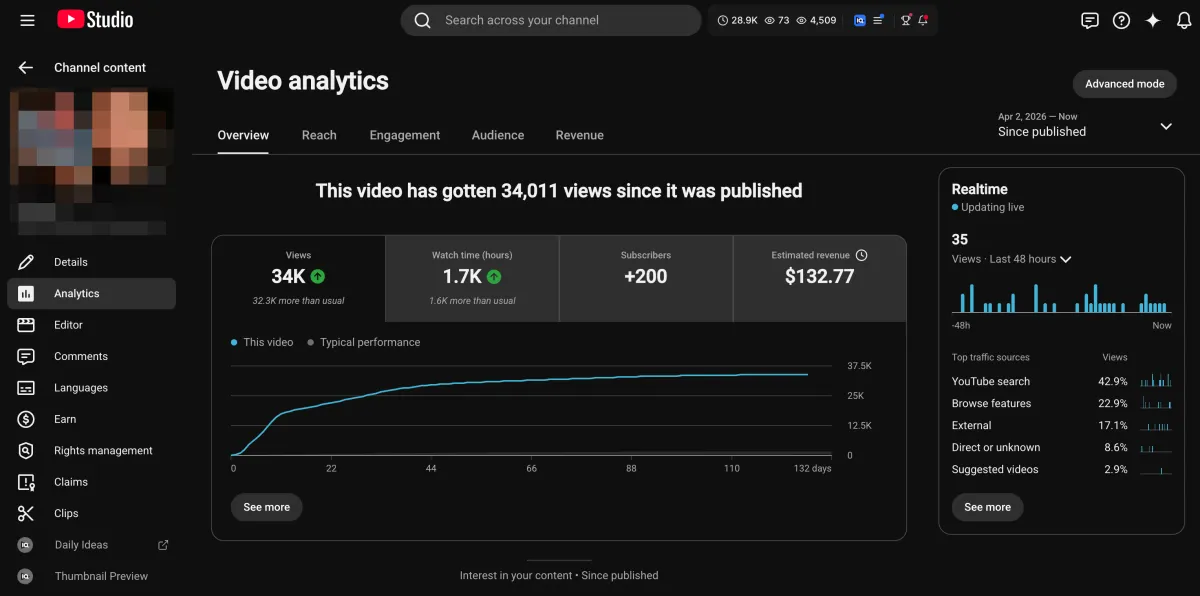
Learn how I turned a $132.77 video into $1000+ per month asset
Full case study on how you can replicate my success with YouTube SEO strategy.
Free downloadThe Zero Audience System
Build permanent YouTube income without a camera or an audience
The full methodology, 31 lessons plus bonuses. Limited spots.