Ask ten creators whether YouTube Shorts SEO exists and you get ten answers. Half say no, Shorts are pure feed lottery. The other half sell a checklist of thirty hashtags. Both are wrong, and the difference matters if you are trying to build something that keeps paying after upload week.
Here is the short version. Shorts are not ranked the way a long form video is ranked, but they are absolutely retrievable, and retrieval is where the durable value sits. Understanding which of those two systems your Short is living in is the whole game.
Two Systems, One Upload Button
Every Short you post enters two completely separate distribution machines.
The first is the Shorts feed. That is a swipe surface with no query behind it. Nobody typed anything. The feed picks a candidate, shows it to a small group, watches what they do, and decides whether to widen. It behaves like a slot machine because it is a real time popularity test, and it forgets your video quickly.
The second is retrieval. That is the results page, the suggested queries under a video, Google's video results, and increasingly answer surfaces that cite video. Here somebody did type something. Your Short is being pulled up because it matches an intent that already existed. Google documents how video gets surfaced across its properties in its video best practices, and Shorts are eligible for the same treatment as any other video on the platform.
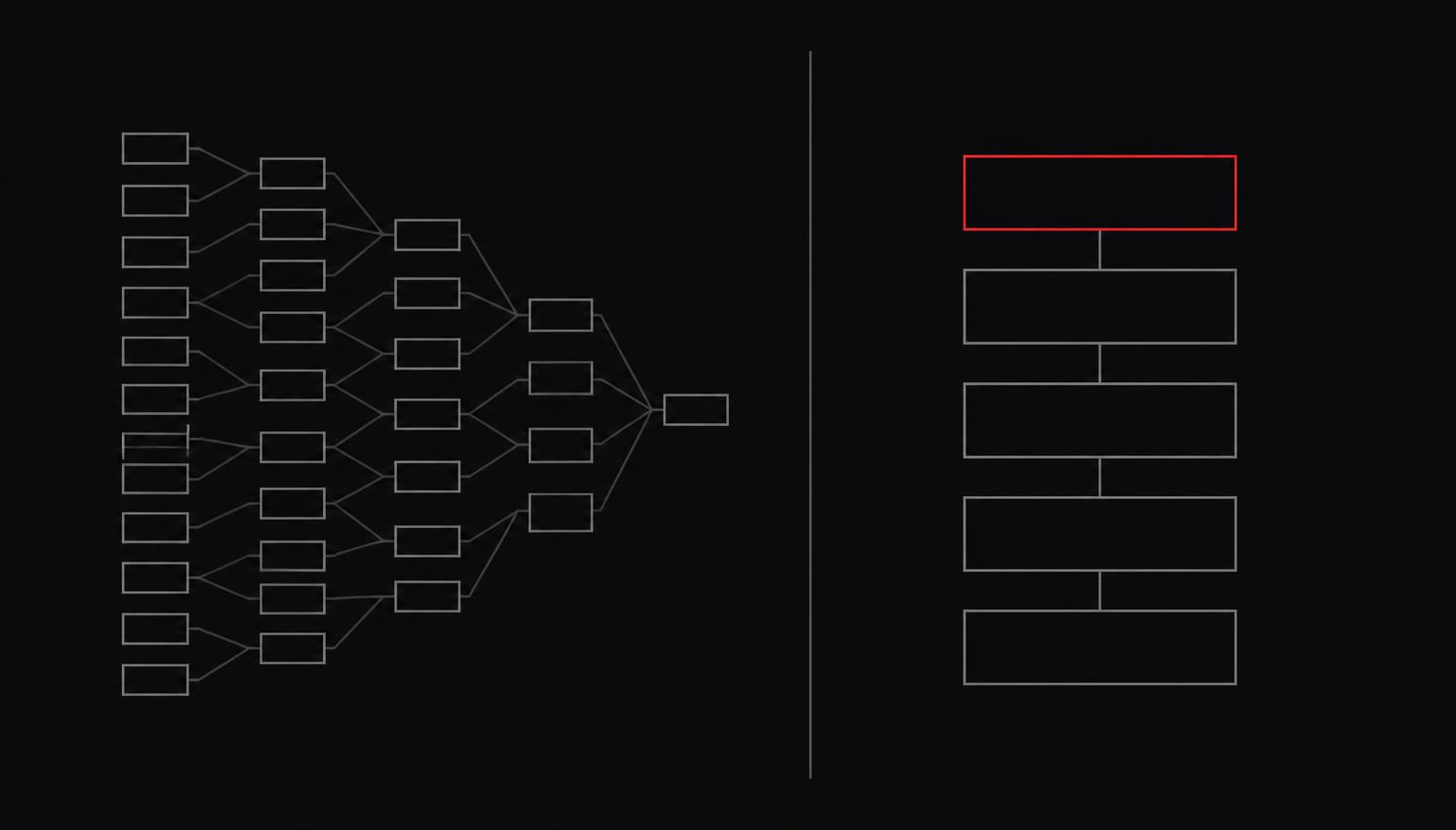
The two systems reward almost opposite things. The feed rewards a hook in the first second and a shape that survives a swipe test. Retrieval rewards specificity, clarity, and being the best short answer to a narrow question. Most people optimise for the first, get a spike, and then wonder why the channel is flat again three weeks later.
So Does Shorts SEO Exist
Yes, but narrow it down. What does not work on Shorts:
- Tags. They do effectively nothing. They never did much on long form either.
- Hashtag stuffing. Three is plenty, thirty looks like spam and gets you nothing.
- Long keyword loaded descriptions. Nobody reads them and the ranking weight is tiny.
- Renaming the file before upload. This has been folklore for a decade.
What does work:
- A title that reads like something a person would actually type. "Cast iron pan rusted after one wash" beats "STOP RUINING YOUR PAN 😱".
- Saying the query out loud in the first three seconds. The spoken transcript is indexed, and on a fifty second video the first line carries most of the topical weight.
- On screen text that matches the topic, because it is read and it also holds silent viewers.
- Picking a question that has a genuinely short answer. If the honest answer needs eight minutes, a Short will never be the best result for it.
- Being one of very few videos answering that exact thing. Competition is the lever nobody wants to pull because it means picking smaller topics.
That last point is where I spend most of my time, and the method is the same one I lay out in the full YouTube SEO guide for 2026. Demand first, competition second, packaging third. Shorts do not change the order, they change how much of each layer you have room for.
The Decay Problem, Drawn
This is the thing that changed how I use Shorts. A feed driven Short and a retrieval driven Short have completely different lifetime shapes.
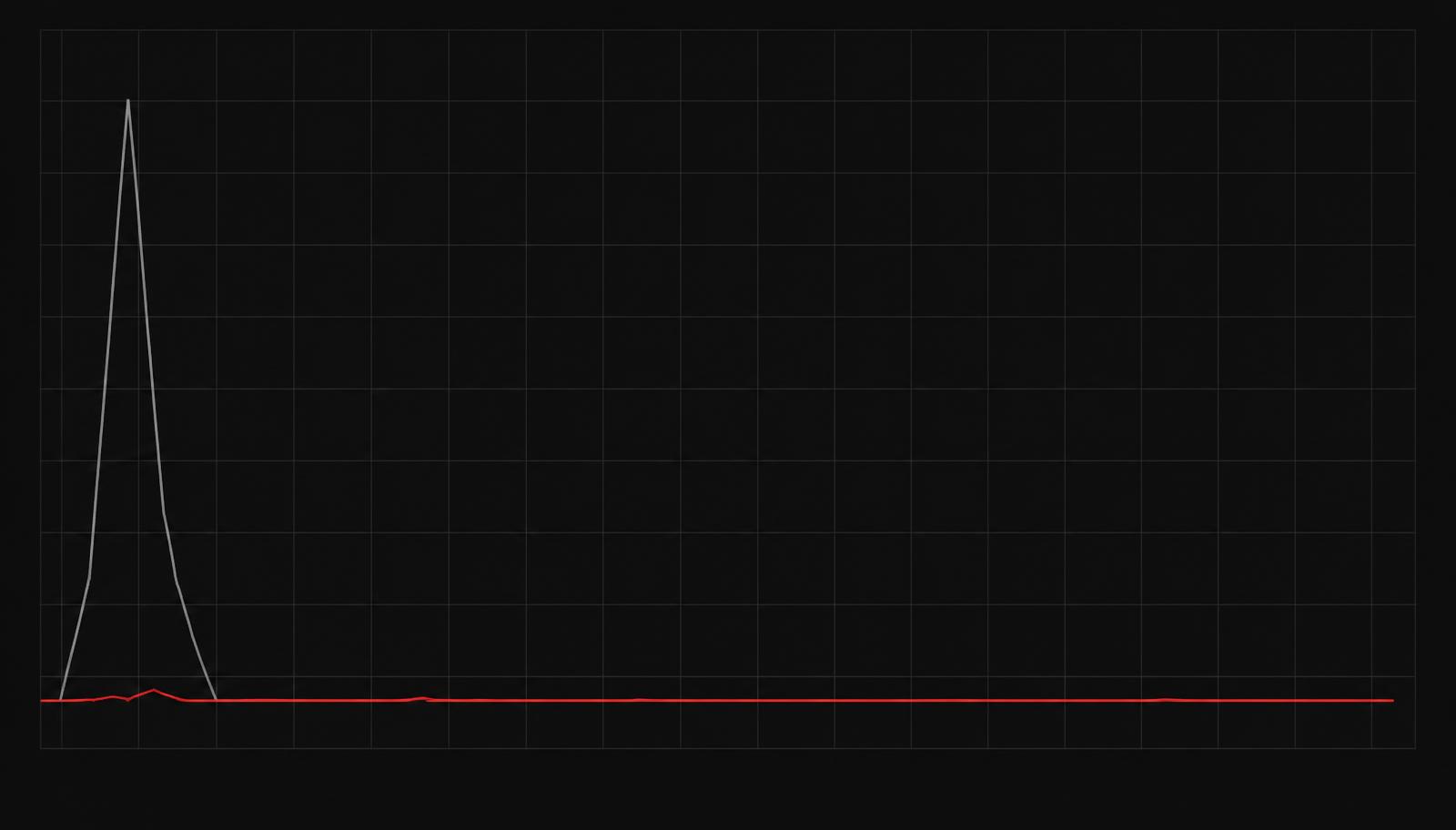
The grey curve is a Short that caught the feed. Ninety percent of its lifetime views arrive inside seventy two hours, and after about nine days it is done forever. The red line is a Short answering a question people type every week. It never spikes. It also never stops. Eighteen months later it is still doing forty views a day, and forty views a day for three years is more total than most spikes.
Neither is better in isolation. The mistake is treating the grey curve as the goal, because you cannot compound a spike. You can only chase the next one.
Why Shorts Pay So Little And What To Do About It
The economics push the same direction. Shorts revenue comes out of a shared pool split across every creator whose video played in the feed, minus music licensing costs, so per thousand views you are usually looking at cents rather than dollars. I broke the ranges down properly in how much YouTube actually pays per view, and you can run your own numbers in the Shorts calculator.
The practical conclusion is that a Short is almost never the asset. It is the door. The asset is the longer video, the channel, or the thing you own off platform. So the only Shorts strategy that has ever worked for me is the one where every Short is pointed at something.
The Format That Actually Compounds
Here is the structure I use when I want a Short to keep earning attention long after posting.
- Pick one question with a genuinely short answer. Not a topic. A question, phrased how somebody would type it.
- Check the results page for it. If the top results are three years old, low effort, or missing entirely, that is your slot. If a channel with two million subscribers made it last month, choose again.
- Say the question in the first line, out loud, near verbatim. This does double duty. It confirms to the viewer they are in the right place and it puts the topic in the transcript immediately.
- Answer inside fifteen seconds. Do not build suspense. Retrieval traffic came for the answer, and withholding it just gets you a swipe.
- Spend the remaining time on the why or the caveat. This is what separates the best answer from the shortest one.
- Title it as the question, lowercase, no manufactured shock. Two or three hashtags maximum.
- End with a specific pointer to the longer video, not a generic subscribe ask.
A Short that answers a question nobody asked is content. A Short that answers a question people type every week is an asset.
Retention On A Fifty Second Video
Retention still decides how far either system takes you, it just behaves differently at this length. A few things I have measured repeatedly across channels.
The first second is not a hook slot, it is a filter. If the frame does not communicate the topic before any words land, a large chunk of the feed audience is already gone. Static text on frame one beats a slow zoom every time.
Loops matter less than people claim, but they matter. A Short whose last frame flows back into the first often shows retention above one hundred percent, and that is one of the few signals that reliably makes the feed widen.
Watch the audience retention graph for the exact second people leave, then cut two seconds before it on the next one. That single habit did more for my Shorts than any title change.
Where Shorts Fit In A Zero Audience Channel
If you are starting with nothing, this is the allocation I would use. Roughly one longer video per week built around one specific problem, and two or three Shorts pulled from moments inside it. The Shorts do acquisition. The longer video does the earning and keeps getting found. Everything I teach in [the Zero Audience System](/) runs on that split.
The mistake I see constantly is a channel that is only Shorts, doing millions of views, making almost nothing, with an audience that cannot be reached again. That is not a business, it is a treadmill. Reddit's creator communities are full of people who found this out the hard way, and the pattern is consistent enough that I collected it in what Reddit actually says about YouTube automation.
Shorts And The Monetisation Threshold
One real reason to make Shorts even at low pay. They count toward joining the Partner Programme through their own route, 1,000 subscribers plus 10 million valid public Shorts views in 90 days, which sits alongside the 4,000 watch hour path. YouTube documents both routes in its Partner Programme requirements. Ten million views in ninety days is not easy, but it is a second door, and for some formats it opens faster than watch hours do. More on the timeline in when do you start earning money on YouTube.
Mistakes I Still See Every Week
- Reposting TikToks with a watermark. It suppresses reach and it looks careless.
- Making Shorts about the channel instead of about a question.
- Chasing a sound or a format trend that will be meaningless in a month. That is a spike by design.
- Ignoring the results page entirely, then concluding ranking does not exist.
- Posting nine Shorts a day and calling it volume. Nine weak candidates lose to one good one.
- Treating Shorts views as if they are worth long form views. They are not close. Check the engagement rate calculator against a long form video on the same channel and the gap is obvious.
Frequently Asked
Do hashtags help Shorts rank? Marginally, as a weak topic hint. Two or three relevant ones are fine. Beyond that you get nothing, and the visual clutter costs you.
Is the Shorts transcript really indexed? Yes, spoken words are transcribed and used as topical signal. It is not a magic lever, but on a short video the first spoken line carries unusual weight because there is so little else.
Can a Short rank in Google? It can and does, especially for narrow how to questions where a fifteen second demonstration is the better answer than an article.
Should I disable the Short to long form recommendation? No. Leave every path open. The whole reason to post Shorts is to move people somewhere with more depth.
How long until a retrieval Short starts working? Usually two to eight weeks, and it climbs slowly. If you judge it after forty eight hours you will delete your best assets.
Are Shorts worth it if I only care about revenue? On their own, rarely. As the acquisition layer feeding a channel built on specific evergreen videos, consistently yes.
The Honest Summary
Shorts SEO exists, it is just smaller than the feed and quieter than the people selling checklists want it to be. Titles that read like real queries, spoken answers in the first seconds, narrow questions with thin competition, and every Short pointing at something durable. That is the entire list. Everything else is noise dressed as optimisation.
If you want to see which niches even have that kind of narrow durable demand, start with the 200 niches breakdown and pick the boring ones.
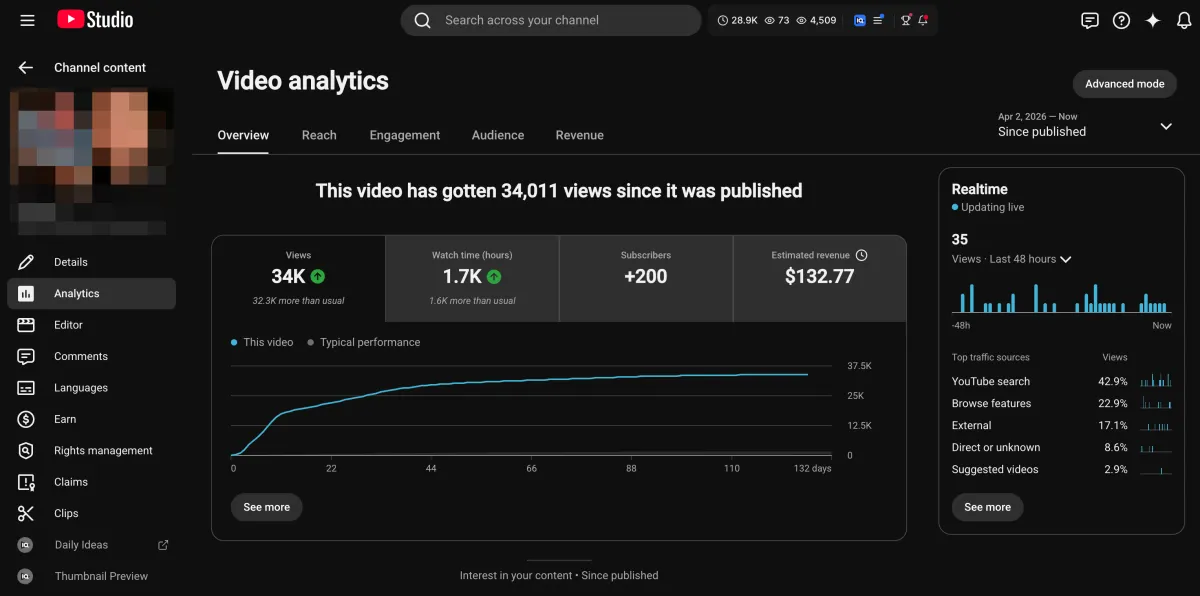
Learn how I turned a $132.77 video into $1000+ per month asset
Full case study on how you can replicate my success with YouTube SEO strategy.
Free downloadThe Zero Audience System
Build permanent YouTube income without a camera or an audience
The full methodology, 31 lessons plus bonuses. Limited spots.