You don't actually need to scroll through hundreds of threads yourself to see the pattern. Strip away the usernames and the specific wording, and the conversation around YouTube automation repeats itself almost everywhere it comes up, r/NewTubers, creator Discord servers, Facebook groups built around the topic, review sites, comment sections under automation course ads. The same handful of arguments show up over and over: is this actually hands off, is the person selling me a course actually legitimate, is the space too crowded to bother with now, and is this even allowed.
Here's the honest version of that pattern, not the version a $6,000 course landing page wants you to see.
The Recurring Complaint: "It's Not Actually Hands Off"
This is the single most consistent pushback across every corner of this conversation, and it's a fair one. Automation gets marketed as hands-off income, set it up once, collect checks forever. The recurring counterpoint from people who've actually tried it: someone still has to decide what topics to cover, review scripts before they go out, catch a bad AI voiceover before it publishes, and figure out why a video flopped. None of that runs itself.
The honest framing isn't that automation removes the work. It's that automation shifts the work from production to management. You're not filming and editing every video yourself, but you're still the person making the decisions that determine whether the channel goes anywhere. Anyone selling automation as a way to earn with zero involvement is selling a version of it that doesn't hold up.
The Course Seller Problem
Look into this topic for more than a few minutes and you'll run into the same ecosystem: paid courses, often priced anywhere from a few dollars to several thousand, promising to teach the "formula" behind automated channels. One example worth naming directly because it's well documented: GrowChannels, a program built around YouTube automation coaching priced at roughly $6,000, has a genuinely mixed public review record. Some reviewers describe real value and direct support. Others describe high-pressure sales tactics, a deposit request before any real commitment, and reviews flagged directly as "Scam Alert."
That specific example isn't unique, it's representative of a much larger pattern. In researching this piece, I came across dozens of near-identical automation guides and courses, many reusing almost the same phrasing, "unlock the formula," "income while you sleep," "cash cow channels," across completely unrelated sellers. That kind of templated, copy-paste marketing language circulating across an entire market is itself a signal worth paying attention to. It doesn't mean every course in this space is worthless. It means the volume of near-identical low-substance offers vastly outweighs the number of people actually teaching something specific and tested.
The Saturation Question
Another argument that comes up constantly: is this space too crowded now to bother starting. It's a reasonable worry, given how visibly the faceless automation channel format has been promoted over the past few years.
The honest answer is that the generic version of this format, broad trending topics, templated titles, interchangeable AI narration, is genuinely crowded and getting harder to stand out in. A channel built around a specific, well-defined problem in a specific niche isn't competing in that crowded lane at all. Saturation is a real concern for the lazy version of automation. It's a much smaller concern for a channel built around something narrow and genuinely useful, which is most of why this model is still worth building in 2026.
Is It Even Allowed?
This comes up constantly, and there's real confusion behind it worth clearing up directly. YouTube doesn't prohibit outsourced production, AI-assisted editing, AI voiceovers, or faceless channels. What the platform's monetization policy targets is content with no real, distinguishable value, videos that are templated or interchangeable, evaluated at the channel level rather than just video by video.
There's also a specific, separate requirement: videos using realistic AI-generated or altered content need the disclosure toggle switched on in YouTube Studio. Skipping that is a policy issue on its own, independent of how good the video actually is. This is one of the more common points of confusion in this whole conversation, people conflate using AI with breaking the rules, when the actual target is content with nothing distinguishing one video from the next.
The Success Stories Buried Under The Noise
It's worth saying clearly: real, working automated channels exist, and they get less attention in this conversation than the scam complaints and the skepticism, because skepticism travels further than a quiet, working business does. Reports of automation creators running numerous faceless channels into six and seven figures combined show up regularly in industry coverage. I'd treat the specific numbers attached to any individual story with some caution, they're rarely independently verified, but the broader pattern, that this model can genuinely work at real scale, is well supported.
The gap between the success stories and the course pitches almost always comes down to the same thing: the people actually earning from this treat it as a real business requiring real judgment. The people selling courses about it are often selling the fantasy version, where the judgment part disappears entirely.
What Actually Separates The Real Ones From The Bait
Across every version of this conversation, the same dividing line shows up. Channels built around a specific, well-defined problem, with someone actually reviewing what gets published, hold up. Channels built by dumping a template into a pipeline and letting it run unattended don't, and increasingly get caught by YouTube's own policy enforcement on top of just failing to find an audience. If you want the unglamorous version of what the platform actually rewards, it maps closely to the factors that decide whether a channel gets picked up at all.
If you're evaluating whether to get into this, the recurring advice worth trusting is the boring kind: pick something specific, keep a real person making the actual decisions, and be skeptical of anyone whose main evidence of success is the course they're selling you rather than a channel you can go watch yourself.
Frequently Asked Questions
Is YouTube automation actually a scam?
The production model itself isn't a scam, plenty of legitimate channels are built this way. The scam risk sits mainly in the expensive coaching and course ecosystem built around it, where the quality varies enormously and the marketing language is often nearly identical across completely unrelated sellers.
Do successful automation creators actually exist, or is it all hype?
Real examples exist and get reported on in industry coverage, though specific earnings numbers attached to individual stories are rarely independently verified. Treat any single success story as a data point, not proof of a guaranteed outcome.
Why does this topic attract so many scam accusations?
Largely because of the coaching and course market around it, not the underlying production model. A market with a huge number of near-identical, low-substance paid guides tends to attract exactly this kind of scrutiny, and often deserves it.
Is the automation niche too saturated to start now?
The generic version, broad trending topics and templated content, is genuinely crowded. A channel built around a specific, well-defined problem is competing in a much smaller, less saturated lane.
The Honest Take After Looking At All Of This
The loudest version of this conversation is either "this changed my life" or "this is a total scam," and neither extreme is the useful one. The quieter, more accurate version is that the production model works fine when someone competent is still making the real decisions, and it fails, or gets sold as something it isn't, when the courses and the marketing around it convince people that judgment is the one thing you're allowed to automate away too.
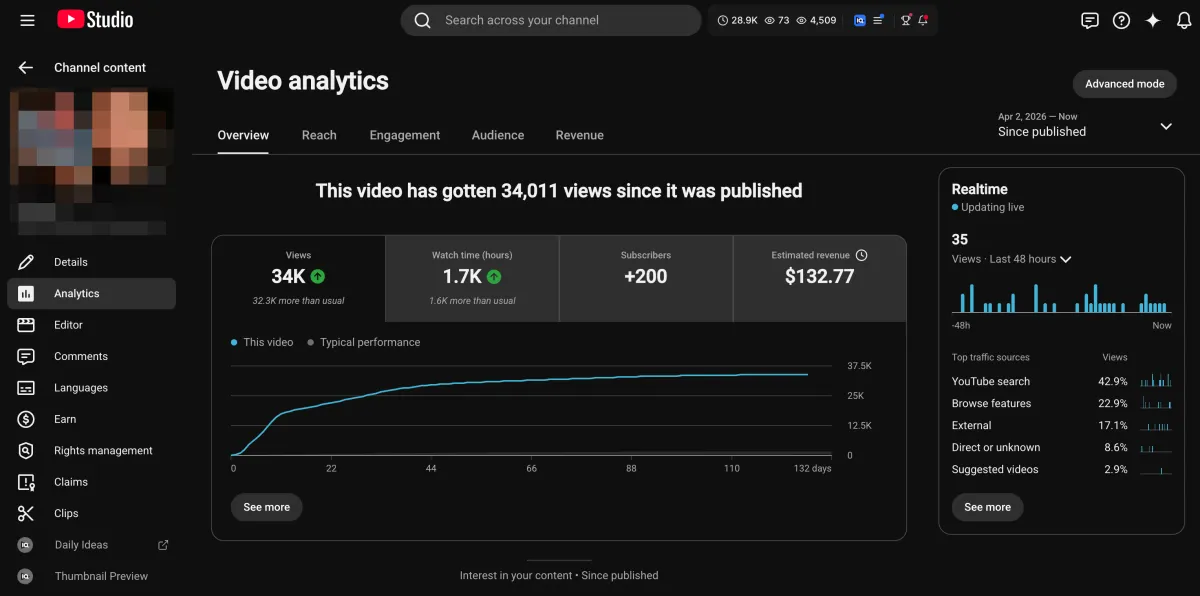
Learn how I turned a $132.77 video into $1000+ per month asset
Full case study on how you can replicate my success with YouTube SEO strategy.
Free downloadThe Zero Audience System
Build permanent YouTube income without a camera or an audience
The full methodology, 31 lessons plus bonuses. Limited spots.