Most "YouTube SEO optimization techniques" articles are recycling advice built for a version of the platform that stopped working years ago, keyword-stuff the description, post at the "optimal time," repeat your tag in five different variations. None of that is a technique anymore. It's folklore. The real techniques that actually move a video's performance now are built around retention, satisfaction, and session behavior, and most of them are things you have to actively do, not settings you fill in once and forget. Here's the real, current list.
The Real Truth Most "Optimization Techniques" Articles Get Wrong
They treat optimization as a one-time checklist you complete before publishing, title, description, tags, done. That checklist still matters, but it's a small fraction of what actually determines whether a video performs. The techniques that make a real difference now happen during editing, after publishing, and across your catalogue as a whole, not just in the upload form. If an article's entire idea of "optimization" ends at the upload screen, it's teaching half the picture.
Technique One: Retention-Based Editing, Not Just Retention-Watching
Checking your retention graph after a video is live is common advice. Actually using it as an editing tool is the technique most people skip. Open your audience retention report and look for sharp, sudden drops rather than gradual decline, gradual decline is normal and expected, a cliff-edge drop at a specific timestamp tells you exactly where you lost people and why. That's information you can act on twice: cut or tighten that exact moment in future videos with a similar structure, and if the video is still gaining traffic, consider re-editing that specific segment directly.
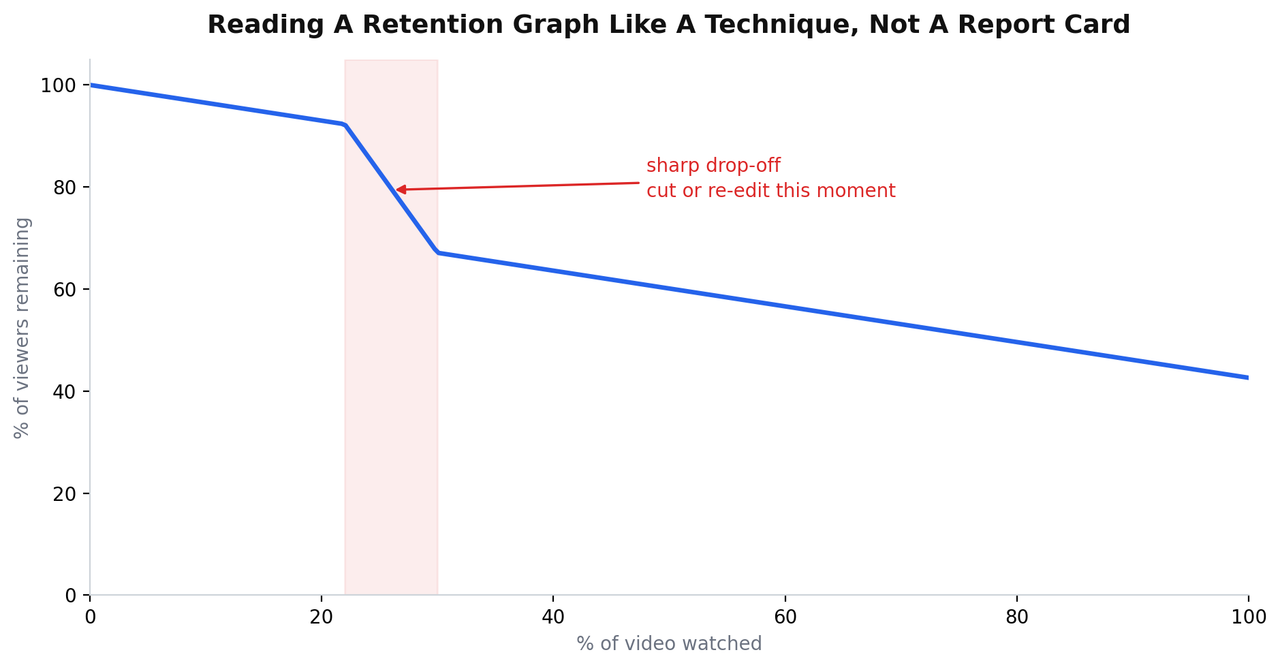
The technique isn't "check your retention." It's building a habit of treating every sharp drop as a specific, fixable editing decision for your next video, not a vague signal that the video "did okay" or "didn't do well."
Technique Two: Systematic Thumbnail And Title Testing
YouTube's built-in testing tools let you run multiple title and thumbnail combinations against real traffic on a live video rather than guessing which one is stronger. The technique here is making this a routine, not a one-off experiment. Run a test on any video where you had genuine uncertainty between two title or thumbnail ideas, let it collect enough data before drawing conclusions, and apply what you learn to your next video's packaging decisions rather than treating each video as an isolated guess.
Technique Three: Session-Chaining With End Screens And Playlists
What happens right after your video ends matters nearly as much as what happens during it, since a video that extends someone's session gets treated as more valuable to recommend than one that ends it. The actual technique: point your end screen at a specific, closely related video, ideally the next logical question a viewer would have, not a generic "subscribe" prompt or your most popular unrelated video. Build playlists around tightly related topics, not your whole channel dumped into one list, and get new videos added to the relevant playlist immediately on publish, not days later once you remember to do it.
Technique Four: Caption Accuracy As An Indexing Lever
YouTube indexes your video's spoken content through captions, and auto-generated captions are good enough for accessibility but not accurate enough to be your only version, especially on names, technical terms, and niche vocabulary, exactly the words most likely to matter for how a video gets matched to a specific search. The technique: review and correct your auto-captions, or upload your own accurate transcript, particularly for any video built around specific terminology your topic depends on. This is a five-minute task most creators skip entirely, and it directly affects how precisely your content gets matched to search intent.
Technique Five: The Shorts-To-Long-Form Repurposing Funnel
Shorts and long-form run on separate recommendation systems, so a Short doesn't directly boost your long-form ranking. What it can do is function as a discovery funnel: clip the single most compelling moment from a long-form video into a Short, and use it specifically to introduce new viewers to your channel, with the full video available for anyone who wants the complete answer. The technique is treating Shorts as a top-of-funnel awareness tool rather than expecting them to move your long-form search rankings directly, since they don't.
Technique Six: Using The Community Tab Between Uploads
A channel that goes quiet between uploads sends a weaker consistency signal than one that stays active. Community posts, polls, behind-the-scenes updates, a question tied to your next video's topic, keep your channel active in a way that costs almost no production time. The technique specifically: post something genuinely relevant to your niche or upcoming content, not generic filler, timed a few days before a new upload to build anticipation and remind existing subscribers you're still active.
Outdated Techniques Still Being Taught As Current
A few pieces of advice that were once reasonable and are now actively unhelpful, worth naming directly. Keyword-stuffing a description with repeated variations of the same term reads as spam to both viewers and modern relevance-matching systems that understand topical meaning rather than counting keyword occurrences. Posting at one universal "optimal time" ignores that your specific audience's active hours matter more than a generic recommendation, and it matters far less for search-driven, evergreen content than for content depending on an immediate recommendation push. Loading fifteen or twenty tags rarely helps beyond a handful of specific, relevant ones, tags mainly assist disambiguation now, not independent ranking. And treating raw watch time as the only signal that matters ignores that satisfaction signals, direct feedback, returning viewers, now sit alongside it as a real, separate input.
A Practical Weekly Optimization Routine
- Pull the retention graph for your two most recent videos and note any sharp drop-offs specifically, not the overall average.
- Check whether any live title or thumbnail test has collected enough data to draw a conclusion, and apply the winner's pattern going forward.
- Confirm your last upload is sitting in the correct playlist and its end screen points somewhere specific.
- Spot-check captions on any video with specific terminology or names likely to be mistranscribed.
- Post one genuinely relevant community update tied to your niche or an upcoming video.
None of this takes more than thirty minutes a week, and it covers the techniques that actually move performance now, not the ones that mattered a decade ago. For the deeper mechanics behind why these specific signals matter, I've broken that down in full in what actually determines YouTube ranking factors, and the complete pre-publish sequence these weekly techniques build on top of is covered in the only YouTube SEO checklist you need before you hit publish.
Frequently Asked Questions
Do these techniques apply to Shorts as well as long-form videos?
Some do, community posts and caption accuracy apply broadly, but Shorts run on a separate recommendation system where completion rate and rewatch behavior matter more than the retention-graph editing technique described here, which is built primarily around long-form pacing.
How often should I actually re-edit a video based on its retention graph?
Rarely for the video itself, more often for the next one. Use a sharp drop-off as a lesson for future editing decisions on similar content, and only re-edit the original if it's still actively gaining traffic and the fix is straightforward.
Is keyword stuffing ever still effective?
No. Relevance matching now evaluates topical meaning rather than counting keyword repetitions, and stuffed metadata is more likely to read as low-effort than to boost relevance.
What's the single highest-impact technique on this list for a smaller channel?
Retention-based editing. It's free, it's specific, and it directly improves the metric most tightly linked to whether YouTube keeps recommending your content, regardless of channel size.
Where I'd Start This Week
Pick one technique from this list you're not currently doing at all, most creators are missing at least two or three, and apply it to your next upload specifically rather than trying to overhaul your entire process at once. Optimization in 2027 isn't a form you fill out once. It's a small set of habits you run every week, and the channels actually improving are the ones running them consistently, not the ones with the most complete upload-day checklist.
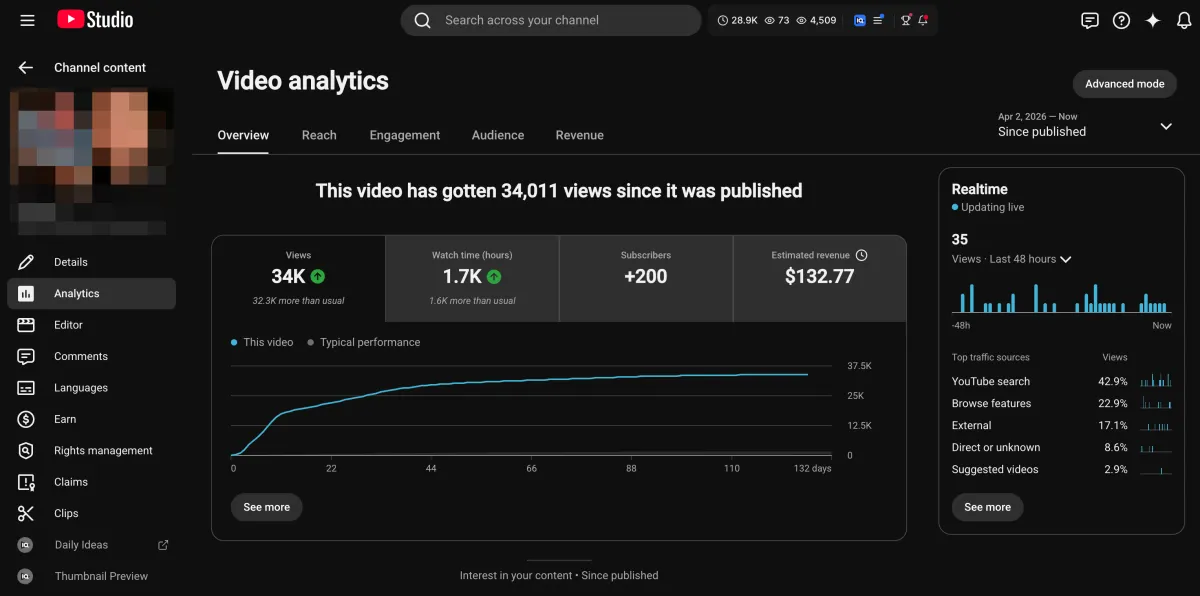
Learn how I turned a $132.77 video into $1000+ per month asset
Full case study on how you can replicate my success with YouTube SEO strategy.
Free downloadThe Zero Audience System
Build permanent YouTube income without a camera or an audience
The full methodology, 31 lessons plus bonuses. Limited spots.