
Zero Audience System is a repeatable operational process for publishing YouTube videos that don't depend on an existing subscriber base to succeed, built around five steps applied to every single video: pick a specific problem, verify real search demand exists, decide the monetization offer, package and publish correctly, then track and repeat. This article walks through exactly how that sequence plays out in practice on YouTube specifically, step by step, rather than the underlying philosophy behind it.
The System In One Sentence
Each video is built as a complete, independent unit designed to be found by a specific search rather than pushed to an existing audience, and the same five-step operational sequence runs every time, regardless of the specific topic. That repeatability is what makes it a system rather than a loose set of tips, the steps don't change from video to video, only the specific topic and research inside each step does.
Why "System" Specifically, Not Just General Advice
General creator advice tends to offer isolated tips, post consistently, use good thumbnails, engage with comments, without a fixed sequence connecting them. A system means the same ordered steps apply to every video, which makes the process teachable and repeatable rather than a collection of separate best practices applied inconsistently. This is also the practical difference between this article and a broader philosophical explanation of the underlying approach, which I've covered separately in what is Zero Audience Strategy, and how it works, worth reading alongside this one if you want the reasoning behind the system, not just the steps themselves.
The Five-Step Operational Sequence

1. Pick A Specific, Searchable Problem
Every video starts by choosing a narrow, well-defined problem inside a broader topic area, not the broad topic itself. "Home workouts" is too broad to target directly. "15-minute home workout with no equipment for beginners" is specific enough to match a real, identifiable search. This single decision determines more about a video's eventual performance than almost anything that happens afterward.
2. Verify Real Search Demand Exists
Before scripting anything, confirm the chosen problem actually has search volume behind it, using a keyword tool or YouTube's own autocomplete, and check the current top-ranking videos for that exact term. If those results are thin, outdated, or from channels no larger than yours, the topic is genuinely winnable regardless of your channel's current size.
3. Decide The Offer Before Scripting
Know exactly what the video is pointing toward, ad revenue as the baseline, an affiliate link, or your own product, before writing a single line of the script. This decision shapes the video's structure and calls to action from the start, rather than being bolted on after the video is already finished.
4. Package And Publish With The Checklist
Title, thumbnail, description, and tags all get built to match the specific search term identified in step one, then run through a consistent pre-publish check before the video goes live: correct thumbnail specs, an accurate description opening line, proper chapters if relevant, and correct audience and disclosure settings. I've laid out this exact checklist in full in the only YouTube SEO checklist you need before you hit publish.
5. Track Results, Then Repeat
Once published, traffic source, click-through rate, and retention get checked against the channel's own averages, not against an external benchmark. Whatever's learned from that specific video feeds directly into the topic selection and packaging decisions for the next one, and the entire five-step sequence runs again on a new, different specific problem.
How This System Handles YouTube's Specific Mechanics
The system is built around the fact that YouTube runs separate systems for Search, the Home feed, and Shorts, each weighing different signals, and it specifically targets Search, since that's the system where a video's own relevance and performance matter more than a channel's existing size or history. I've covered the deeper mechanics of exactly which signals matter most inside that system in what actually determines YouTube ranking factors.
A Realistic Operating Cadence
One full pass through the five-step sequence per video is the unit of work, and a sustainable cadence for most people running this alongside other responsibilities is one to three completed cycles a week. The system doesn't require daily publishing to function, it requires consistency in running the full sequence correctly every time a video goes out, rather than skipping steps under time pressure.
How This Differs From The Underlying Strategy
If you've read the companion piece on Zero Audience Strategy, this article is the operational layer sitting underneath it. The strategy article explains why this approach works and how it differs from traditional creator advice. This article explains the literal, repeatable sequence of actions that implements that strategy on YouTube specifically. Reading both gives you the reasoning and the execution steps together, reading either alone leaves out one half of the picture.
Frequently Asked Questions
Does this system require a large upfront time investment per video?
The research and verification steps add real time compared to publishing without any planning, but that time investment is what prevents publishing videos aimed at topics with no real search demand behind them, which wastes far more time in the long run.
Can this system work for a channel that already has subscribers?
Yes. The five-step sequence doesn't depend on channel size in either direction, it works the same way for a brand-new channel and an established one, since each video is still built to be found independently through search.
How is "the system" different from "the strategy"?
The strategy is the underlying reasoning and philosophy, why search-driven, specific, evergreen content works without requiring an existing audience. The system is the literal, repeatable sequence of steps that puts that reasoning into practice on every video.
What happens if a video doesn't perform after going through all five steps?
Step five's tracking is designed to catch this. Check traffic source and retention specifically to identify which part of the sequence likely broke down, whether that's a niche without enough real demand, weak packaging, or a video that didn't hold attention, then apply that lesson to the next cycle.
Where To Go From Here
Pick one specific topic, run it through all five steps this week, and track the result before starting the next one. Doing this repeatedly is what turns individual videos into the kind of library that keeps generating traffic without ongoing daily attention, covered in full in how to build an audience from zero on YouTube.
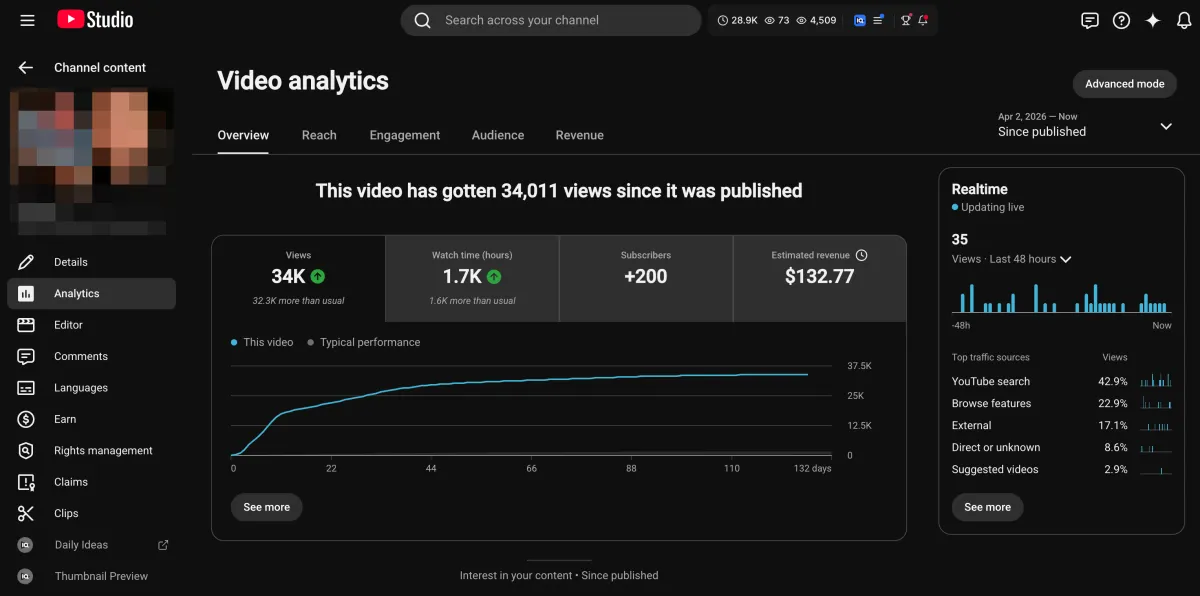
Learn how I turned a $132.77 video into $1000+ per month asset
Full case study on how you can replicate my success with YouTube SEO strategy.
Free downloadThe Zero Audience System
Build permanent YouTube income without a camera or an audience
The full methodology, 31 lessons plus bonuses. Limited spots.