
Short answer. The business model is legitimate. Most of the way it gets sold is not. Those two facts sit next to each other and cause almost all the confusion around this topic.
It is legitimate in the plainest sense. You are allowed to run a channel you do not appear in, hire people to help make the videos, and earn from ads and sponsors. YouTube's own terms have no rule requiring your face or your voice. Channels like this have existed for well over a decade, they get monetized, and they get bought and sold at real valuations.
What is not legitimate is the packaging. Done for you channels sold at five figures. Guaranteed monthly returns. Recycled uploads with a synthetic voice on top. That is where people lose money, and because that version is the loudest, the whole model gets a reputation it did not fully earn.
What Is Genuinely Real
- Channels without a face get monetized. Approval depends on the content being original and useful, not on who is on camera.
- Hiring help is normal. Writers, editors, and voice talent are standard practice across the platform, including on channels you would never guess were team made.
- Old videos keep earning. A video answering a specific question people look up every month can still be earning three years after it was published. That is the part of the model worth building around.
- Channels are assets with a resale market. Buyers pay multiples of monthly profit. I covered how that works in can you sell a YouTube channel.
What Is Not
Done for you channel management
Someone builds a channel for you, promises returns, takes ten to fifty thousand up front, and publishes low quality uploads until you stop asking. You have no control, no leverage, and no recourse. This single offer type is responsible for most of the bad reputation. If money is being taken up front against a promised return, treat it as an investment scheme and walk away.
Reuploading other people's work
Clipping and stitching existing footage with a voice on top gets caught. YouTube's reused content policy exists for exactly this, and the usual outcome is demonetization after months of work. Transformation has to be real, meaning you add commentary, structure, analysis, or original visuals that did not exist before.
Guaranteed income timelines
Nobody can promise you $5,000 a month by month three. Anyone doing so is selling a feeling. Realistic timelines run four to twelve months to meaningful revenue, which I walked through in when do you start earning money on YouTube.
Why Reddit Is So Negative About It
If you spend an hour in the relevant threads, the sentiment is brutal, and it is worth understanding why. Most posters encountered the model through the done for you version or through an ad promising a fast result. Very few encountered the quiet version, because the people running the quiet version are not posting about it.
There is also a survivorship problem in reverse. Failures post. People with three profitable channels do not announce them in public, because attention brings copycats to their exact topics. I pulled the recurring criticisms apart in what Reddit actually says about YouTube automation, and most of them are accurate criticisms of a bad version of the model.
The Legitimacy Test
Five questions. Run any offer or channel plan through them.
- Who owns the channel and the login? If it is not you, on your account, it is not your asset.
- Is anything guaranteed? A guaranteed return on a platform nobody controls is either dishonesty or ignorance. Both cost you money.
- Is the content original? If the plan is stitching clips you did not make, the monetization risk is not theoretical.
- Would this work with zero followers on day one? If the model depends on existing attention, it is not the model you were promised.
- Does the money go into building, or into a promise? Paying for scripts, editing, and voice work is buying production. Paying someone for future returns is buying a promise.
Fail any of these and the specific offer is not legitimate, even though the underlying business model is.
Where It Actually Goes Wrong For Honest Beginners
Nobody scams them. They just build on sand.
They pick a topic because it looked fun. They publish into a category where twenty large channels already dominate. Eight videos, no traction, and they quit at week nine convinced the model is fake. What actually failed was topic selection, not legitimacy. That is why I put demand and competition reading before production, and why the ranking factors that decide it matter more than editing quality does at the start.
The other common failure is impatience with a channel that has no history. New channels get distributed cautiously, and the first weeks look dead even when everything is correct. Warming up a channel is the boring fix.
How To Check For Yourself
You do not need to trust me on any of this. Do this in twenty minutes.
- Pick a boring practical question you would look up yourself, something like resetting a specific appliance error code.
- Look at what comes up. Note how many results are channels with no visible presenter, no branding, and under 50,000 subscribers.
- Check their upload dates. If a video from 2022 is still the top answer with growing view counts, you are looking at the real version of this model working.
That exercise convinces people faster than any argument. The evidence is public.
Verdict
Legitimate as a business. Frequently dishonest as an offer.
If you build it yourself, own the account, publish original work on topics with proven demand, and give it six to twelve months, it is one of the more durable things you can build online. If you pay someone to do all of that for you against a promised return, you are not buying a channel, you are buying a story.
If you want the version I teach, it starts from zero subscribers and no camera, and you can read what a course on this should cover before deciding whether to learn it from me or assemble it yourself.
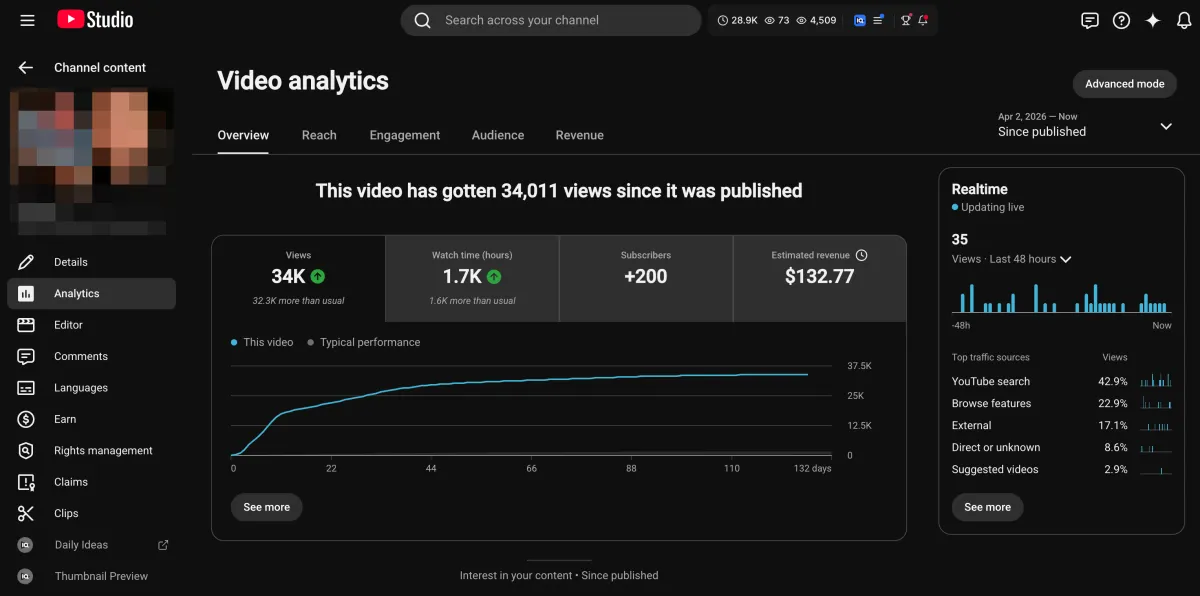
Learn how I turned a $132.77 video into $1000+ per month asset
Full case study on how you can replicate my success with YouTube SEO strategy.
Free downloadThe Zero Audience System
Build permanent YouTube income without a camera or an audience
The full methodology, 31 lessons plus bonuses. Limited spots.